


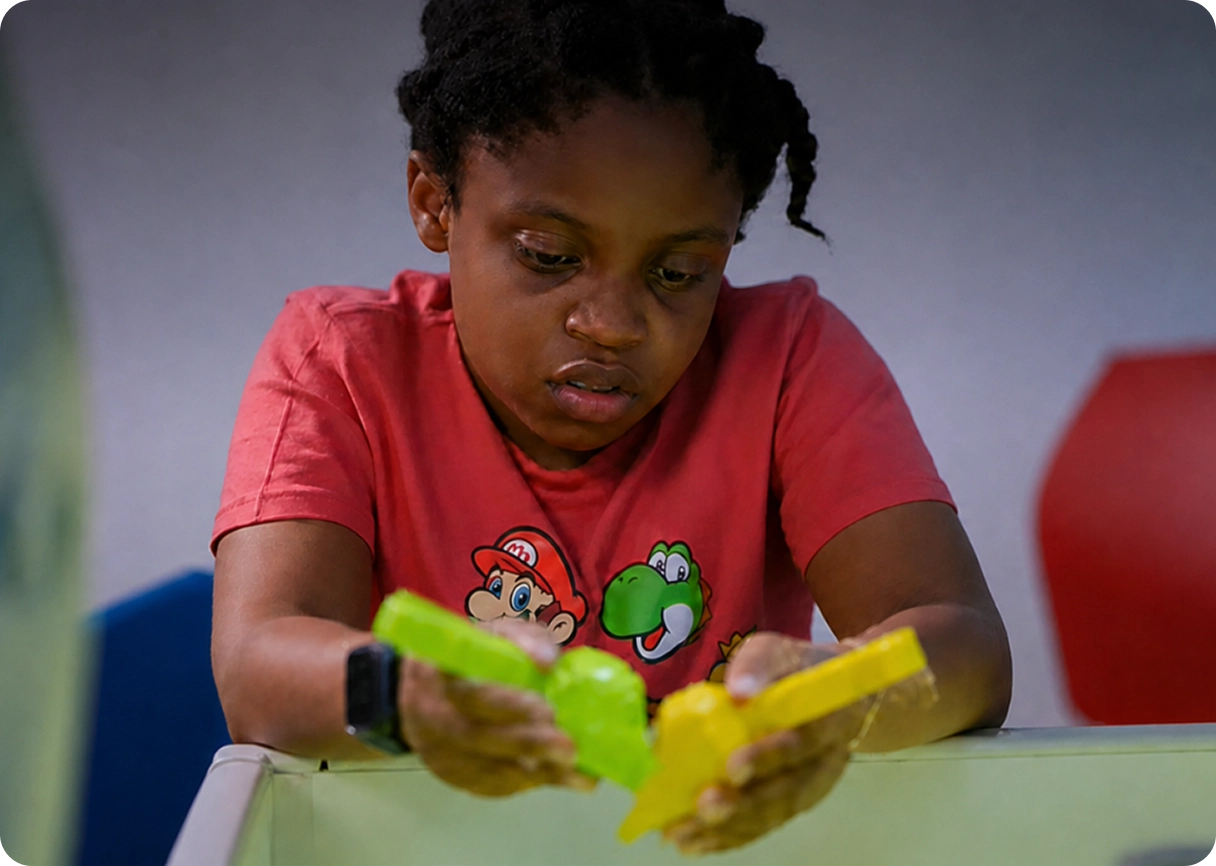
When a child turns away from an activity, leaves the learning area, or simply says “no,” the first question should not be, “How do I make them listen?” The more useful question is, “What is making participation difficult right now?”
The activity may be too challenging, too unpredictable, too noisy, or disconnected from the child’s interests. The child may need more time to observe, a movement break, a different way to respond, or a clearer understanding of what will happen next.
There is no single answer for engaging a child who refuses to participate. Effective child engagement strategies begin with identifying the barrier and creating a more accessible entry point into the activity.
Refusal Is Information, Not a Character Trait
It is easy to describe a child as “unmotivated” when they repeatedly avoid an activity. However, refusal often communicates something more specific. These barriers can affect any child, including children with disabilities or developmental differences. For some children, sensory, communication, motor, cognitive, or self-regulation needs may make these barriers more frequent, more intense, or more difficult to express. The statements below represent possible meanings behind refusal – they are not necessarily words the child could put into words themselves:
- ”I do not understand what I am supposed to do.”
- “This feels too difficult.”
- “The room is too loud or visually busy.”
- “I am afraid of making a mistake.”
- “My body needs to move.”
- “I do not know when this activity will end.”
- “I need more control over what happens.”
- “This activity does not feel meaningful to me.”
Participation and compliance are not the same thing. A child can follow instructions without being actively engaged, while another child may participate through watching, pointing, choosing, or completing only one part of an activity.
Recognizing these different forms of participation helps educators, therapists, and caregivers find an appropriate starting point.
Start by Identifying the Barrier
Before introducing a new prize, providing more direction, or trying to make the activity more exciting, take a moment to observe what happens immediately before the child disengages.

Ask the following questions:
-
Does the child understand the activity?
Long verbal directions, unfamiliar vocabulary, or too many steps may create a communication barrier. -
Is the challenge at the right level?
A task that is too difficult can lead to frustration. A task that is too easy or repetitive can lead to boredom. -
Could the environment be affecting participation?
Lighting, noise, movement, textures, proximity to other people, and visual clutter may all influence a child’s comfort. -
Does the child have any meaningful choices?
A child may resist when every part of the activity – including the materials, order, pace, and response method – is selected by someone else. -
Is the child tired, hungry, uncomfortable, or worried?
A child’s ability to participate can change throughout the day.
The ECTA Center’s guidance on supporting participation recommends looking for barriers and adapting the environment, materials, instructions, or schedule to help a child become more involved. This approach focuses on changing the conditions around the activity instead of treating the child as the problem.
1. Connect the Activity to the Child’s Interests
A familiar interest can provide a bridge into an unfamiliar task.
If a child likes animals, vehicles, music, space, or a specific character, incorporate that interest into the activity when appropriate. A counting task can feature favorite animals. A movement activity can become a space mission. A sequencing exercise can involve making a preferred meal.
This does not mean every task must revolve around one special interest. The goal is to use something familiar to establish trust and help the child understand that participation can be enjoyable and personally meaningful.
Creative ownership can also be motivating. Instead of only showing finished content, invite the child to contribute an idea, choose a theme, or create something that becomes part of the activity.
2. Offer Meaningful Choices
Choice can increase a child’s sense of control, but the choices must be real and manageable.
Instead of asking an open-ended question such as “What do you want to do?”, offer two clear options:
- “Would you like to start with the matching game or the movement game?”
- “Do you want to work at the table or on the floor?”
- “Would you like to play alone first or with a partner?”
- “Do you want to use your hand or a soft object to make your selection?”
The adult can still define the learning objective while allowing the child to choose how to approach it.
Avoid offering a false choice if only one answer is actually acceptable. If the child cannot actually decline an option, explain the expectation clearly and offer choices about the order, materials, duration, or response method instead.
3. Let the Child Observe Before Participating
Some children need time to understand a new activity before they feel comfortable joining.
Allow the child to:
- watch an adult demonstrate the activity;
- observe another student;
- stand near the activity without being prompted repeatedly;
- help select materials;
- control one simple part of the activity;
- complete only the final step.
A child who watches closely may already be processing the rules, sounds, movements, and social expectations. Observation can be an active stage of learning rather than evidence that nothing is happening.
Inviting the child to participate after a demonstration is often more effective than repeating verbal instructions.
4. Make the Beginning and Ending Predictable
Uncertainty can make even an enjoyable activity difficult to approach. Children are more likely to participate when they understand what they will do, how long the activity will last, and what happens afterward.
Depending on the child, helpful support may include:
- a short visual schedule;
- a demonstration of the finished task;
- a visible timer;
- a consistent opening routine;
- a “first, then” statement;
- a specific number of turns;
- a clear finishing point.
For example, “First we will find three animals, then you can choose the next game” is more concrete than “Let’s first finish this assignment.”
Predictability does not require making every session identical. The structure can remain familiar while the themes, activities, and challenge level change.
5. Lower the Entry Point
A child does not need to complete the entire activity for the first attempt to be successful.
Create an achievable first step:
- touch or identify one item;
- complete one turn;
- choose between two answers;
- copy one movement;
- join for 30 seconds;
- play without a timer;
- work with an adult instead of competing against a peer.
If the child succeeds comfortably, gradually increase the complexity, duration, or level of independence.
When a task includes speed, scoring, or competition, consider whether these features are helping or creating pressure. Some children enjoy a competitive format, while others participate more comfortably at their own pace.
The objective is not to remove every challenge. It is to create a challenge the child can understand and approach without becoming overwhelmed.
6. Change the Format, Not Necessarily the Goal
When a tabletop task is not working, the learning objective may still be appropriate – the format may be the problem.
The same concept can often be practiced through:
- movement-based learning activities;
- touch-based activities;
- drawing;
- music or sound;
- visual matching;
- partner play;
- a simple cause-and-effect task.
For example, a child can identify a correct answer by stepping on it, reaching toward it, touching it, or selecting it at a table. Changing the response method may make the task more accessible without changing the underlying educational goal.
This is where multisensory learning activities and game-based learning in special education can be useful. They can provide a clearer, more comfortable, and more meaningful way to participate.
7. Provide Immediate, Specific Feedback
Children need to understand how their actions affect the activity.
Immediate feedback might include:
- a visual change after a correct selection;
- a sound connected to an action;
- movement of an object on the screen;
- specific verbal feedback;
- access to the next part of the activity;
- a natural result within the game.
Adult feedback should describe what the child did:
- “Nice job! You waited your turn.”
- “Nice job! You tried again after the first answer did not work.”
- “Thank you for letting me know that the sound was too loud.”
- “I’m proud of you; you went three times.”
This is more informative than general praise such as “Good job.”
Attempts, communication, self-advocacy, and recovery after a mistake are all meaningful forms of progress.
How NeuroLevel Tools Can Support Different Entry Points
No device can motivate every child, and more sensory input is not always the answer. The appropriate tool depends on the child, the activity goal, the environment, and the guidance of the educator or therapist.
NeuroLevel equipment offers several ways to change how a child approaches an activity.
For Children Who Engage Through Full-Body Movement
The NeuroLevel Sensory Floor responds to movement without requiring a handheld controller. Activities can combine projected visuals, sound, physical movement, and immediate cause-and-effect feedback.
Teachers and therapists can use the floor for individual or group activities and select games according to the purpose of the session. The available models include both ceiling-mounted and mobile configurations, allowing facilities to choose an option that fits their rooms and installation requirements.
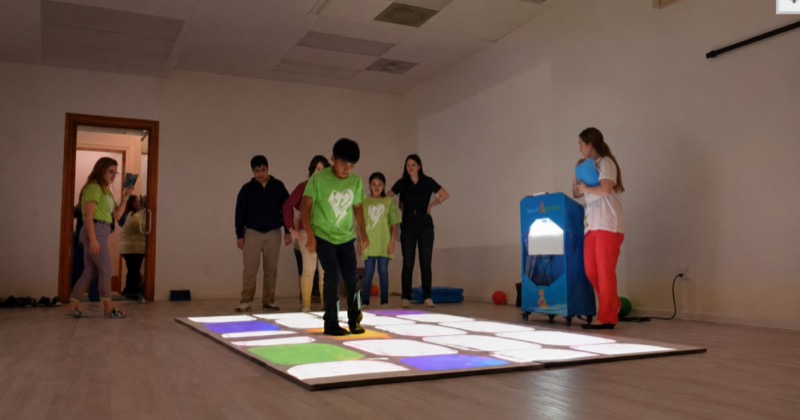 NeuroLevel Sensory Floor
For Standing, Reaching, and Visually Directed Activities
The Sensory Wall provides a vertical activity area that can be used for reaching, visual selection, targeting, and movement-based tasks. A wall format may be useful when the goal involves standing participation or when a child responds better to visuals presented at eye level.
The activity should still be adjusted to the individual. Speed, visual complexity, number of targets, and physical demands can all influence participation.
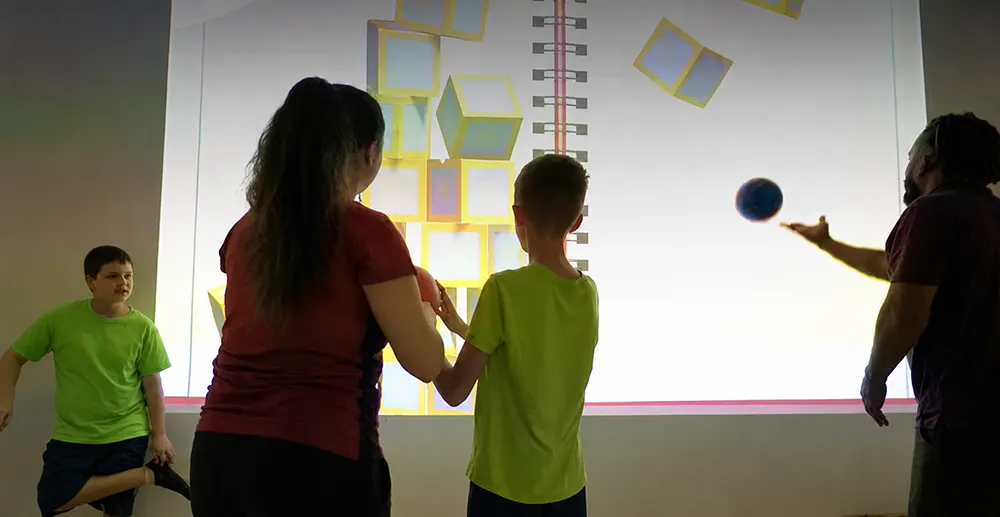 Sensory Wall
For Seated or Small-Group Participation
A child who does not want to move around a large projection area may prefer a more grounded format. The Sensory Multi-Touch Table supports touch-based activities for individual work, partner activities, and small groups.
It can provide another way to practice choice-making, visual attention, turn-taking, matching, drawing, and problem-solving without requiring full-body movement.
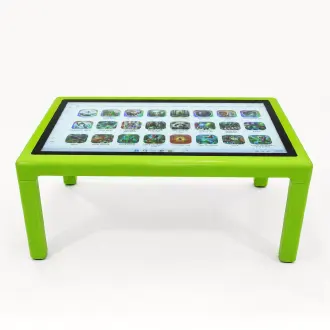 Sensory Multi-Touch Table
For Creative Ownership
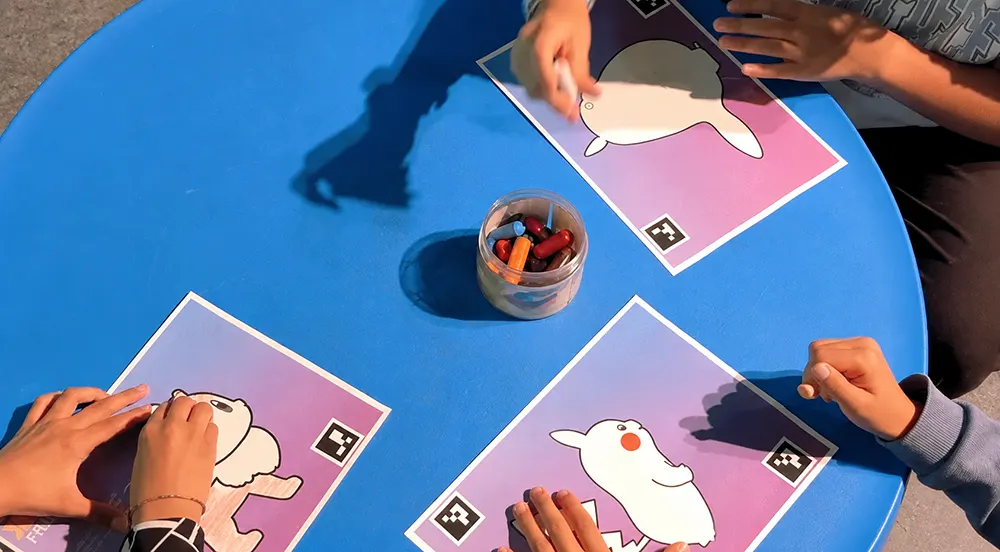
With Sensory Animated Drawings, a child’s paper drawing can become part of a digital animated scene. This creates a direct connection between the child’s idea and what appears on the screen.
The format can be particularly useful when drawing, favorite characters, storytelling, or imaginative play provide a stronger entry point than a preselected game.
 Sensory Animated Drawings
For Tactile and Open-Ended Exploration
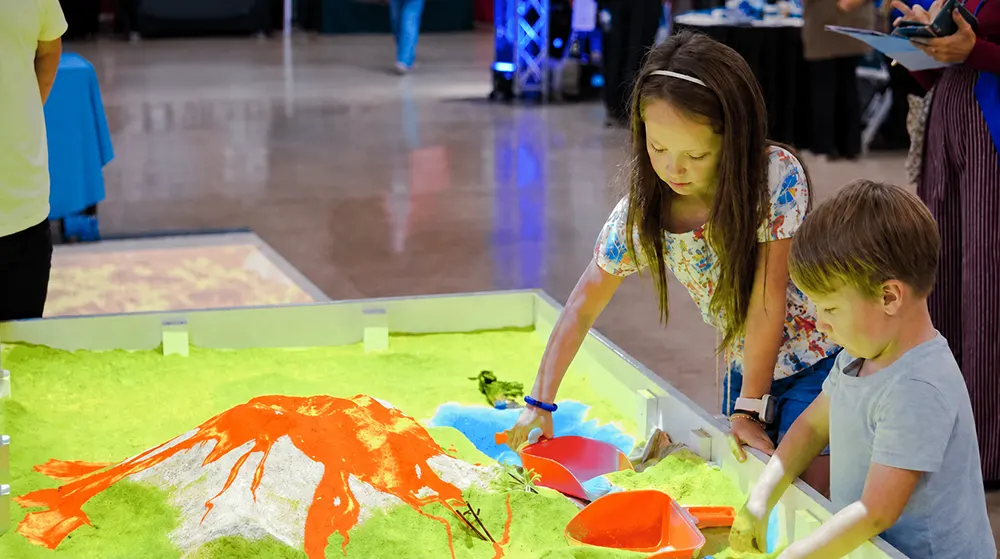
The AR Sensory Sandbox uses specially selected sand rather than ordinary play sand and enhances it with projected visual scenarios. Children can shape the terrain and watch the projected environment respond to their actions.
This open-ended format may appeal to children who enjoy construction, landscapes, science themes, or tactile exploration. It may also provide a new entry point for children who usually avoid sand. We once worked with a child who generally disliked sand but played with our Sensory Sandbox for about 40 minutes without even realizing they were interacting with sand. Although every child responds differently, this experience shows how projected visuals and immediate feedback can change the way a familiar tactile material is perceived. Participation should still be introduced gently and guided by the child’s comfort.
 AR Sensory Sandbox
A Field Note From a U.S. Education Program
In feedback shared with NeuroLevel, a transition coordinator described introducing a Mobile Sensory Floor to a group of high school students during an after-school period when students were usually tired.
Students with different levels of independence quickly began exploring the activities together. The coordinator also reported that moving the system into an adjacent room allowed the program to maintain one space for regular instruction and another for a short movement-based break.
This is an individual program experience, not clinical evidence that the same equipment will produce the same response for every student. However, it illustrates an important principle: sometimes participation changes when the location, social format, type of movement, or response method changes.
The students weren’t simply given a more colorful version of the same task. They were offered a different way to enter the activity.
Measure Participation, Not Only Correct Answers
When evaluating student participation strategies, correct answers should not be the only measure.
Educators and therapists can also observe:
When to Involve the Child’s Support Team
Persistent refusal, intense distress, a sudden change in behavior, or difficulty accessing essential activities may require input from the child’s family and professional team.
Depending on the setting, this may include:
- the classroom teacher or special education teacher;
- an occupational therapist;
- a speech-language pathologist;
- a physical therapist;
- a behavioral professional;
- the child’s physician or another qualified healthcare provider;
- members of the child’s IEP team.
A scoping review of motivation and structured physical activity among autistic youth found that sensory demands in the environment could reduce motivation to participate, while autonomy and individual experience were also important considerations. These findings support observing the environment and the child’s perspective, but they do not establish that a specific product will improve participation for every child. Read the scoping review.
Research on sensory and sensorimotor approaches has also reported mixed results depending on the intervention and the child’s sensory characteristics. A systematic review of school participation reinforces the need for individualized decision-making.
Sensory equipment is an activity tool. It does not replace professional assessment, an individualized treatment plan, or the work of a qualified therapist.
A Quick Engagement Checklist
Before beginning an activity, ask:
Not assessed yet
Tick the points that already apply to your session to see how ready the activity is.
Participation Begins With a Better Entry Point
The most effective response to refusal is not necessarily a bigger reward or more repeated instructions. It may be a smaller first step, a clearer sequence, a different environment, or a new way for the child to interact with the task.
Movement, touch, creativity, immediate feedback, and shared play can all create valuable entry points – but only when they match the child’s needs and the purpose of the activity.
NeuroLevel develops sensory and educational equipment in the United States for schools, therapy centers, sensory spaces, and other professional environments. Explore available sensory room configurations, or contact NeuroLevel to discuss the users, goals, room conditions, and participation needs of your program.
