


Interactive Sensory Floor Projector for Learning, Therapy, and Active Play
 Made in USA
 Approved by Therapist and Educators
 3 Years Warranty
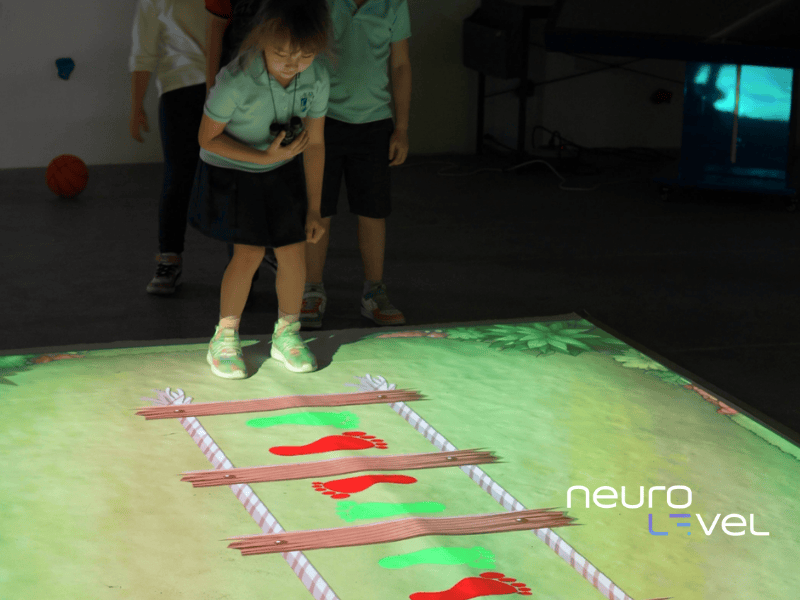
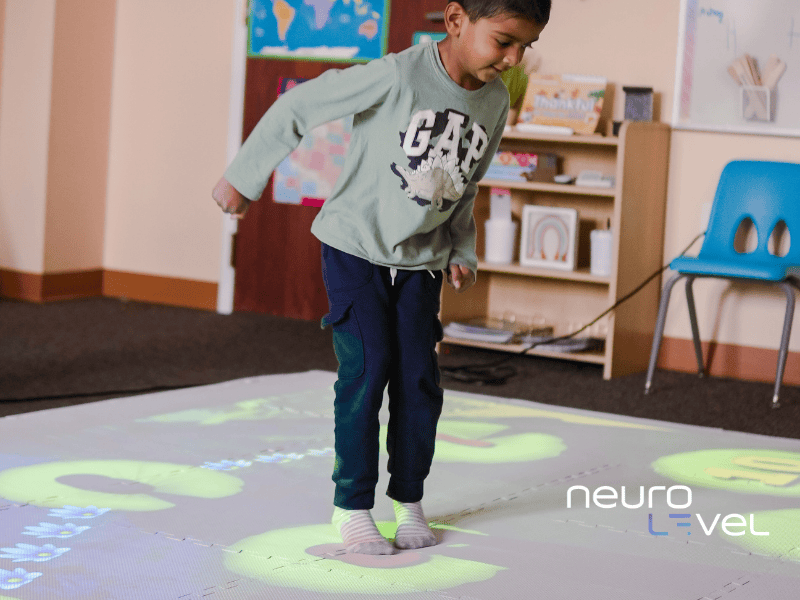
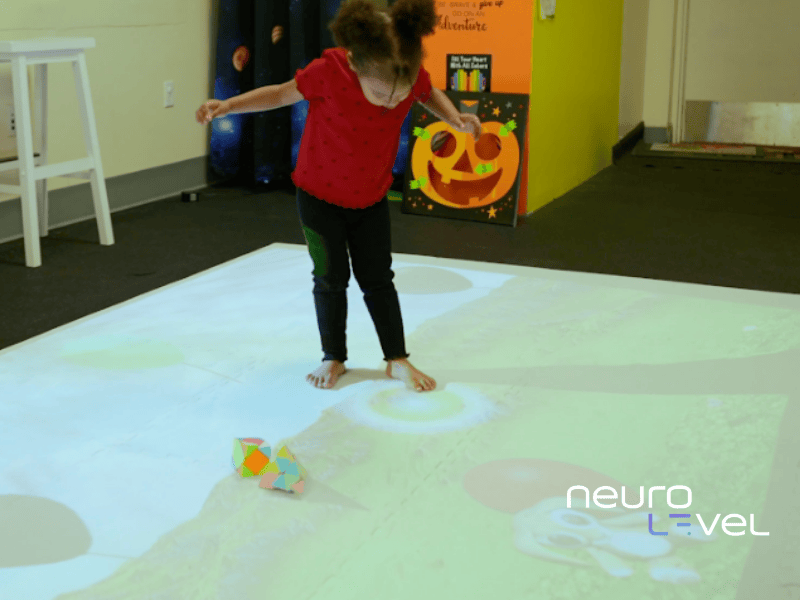
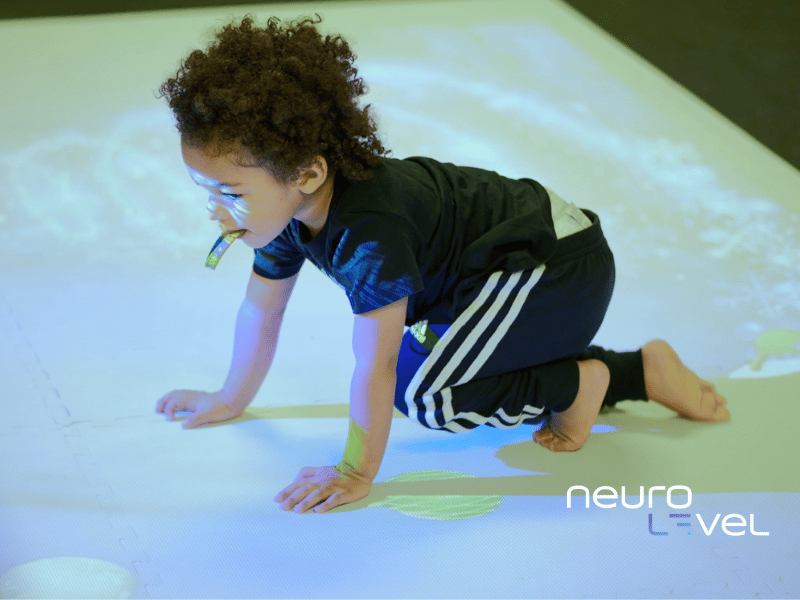
Transform any suitable space into an engaging and inclusive interactive environment with NeuroLevel’s interactive sensory floor projector. The system combines motion-tracking technology, responsive floor projection, sound, and specialized therapeutic and educational software to create activities that react to users’ movements in real time.
Designed for schools, special education classrooms, sensory rooms, therapy centers, recreational facilities, and other interactive spaces, the NeuroLevel Sensory Floor supports educational activities, movement-based games, sensory engagement, sensory regulation, and group participation.
Choose from ceiling-mounted and mobile models to accommodate different room sizes and lighting conditions.
Specialist's Opinion

Dorinda Luzardo
Autism Intervention & Special Education Expert
Gabriela De la torre
BA, BCaBa, ABA Therapist
Lis Espinosa
RBT, ABA Therapist
Amanda Sosa
BCBA PCM-P2 Behavior Analyst
Where Can the Interactive Sensory
Projector Be Used?
The NeuroLevel interactive projection system can be adapted to a wide range of educational, therapeutic, recreational, and inclusive environments. Stationary and mobile models allow organizations to select a configuration based on room size, lighting conditions, installation requirements, and how the space will be used.
Special Education Classrooms
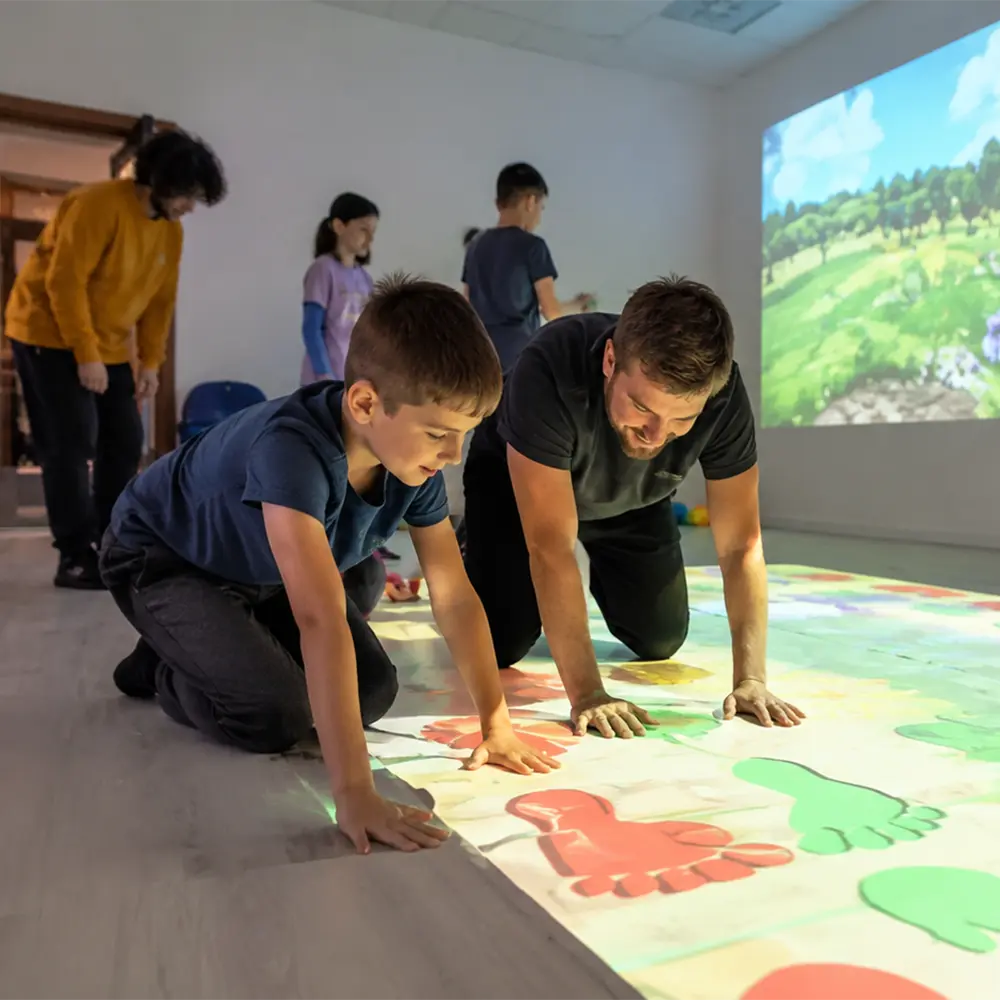
An interactive sensory floor projector helps teachers incorporate movement, visual prompts, and game-based activities into structured lessons that support Short-Term IEP Goals. It supports academic learning across areas such as numbers, letters, science, reading, problem-solving, following instructions, and other educational topics, while providing movement breaks that can help regulate energy levels and maintain attention.
Sensory Rooms
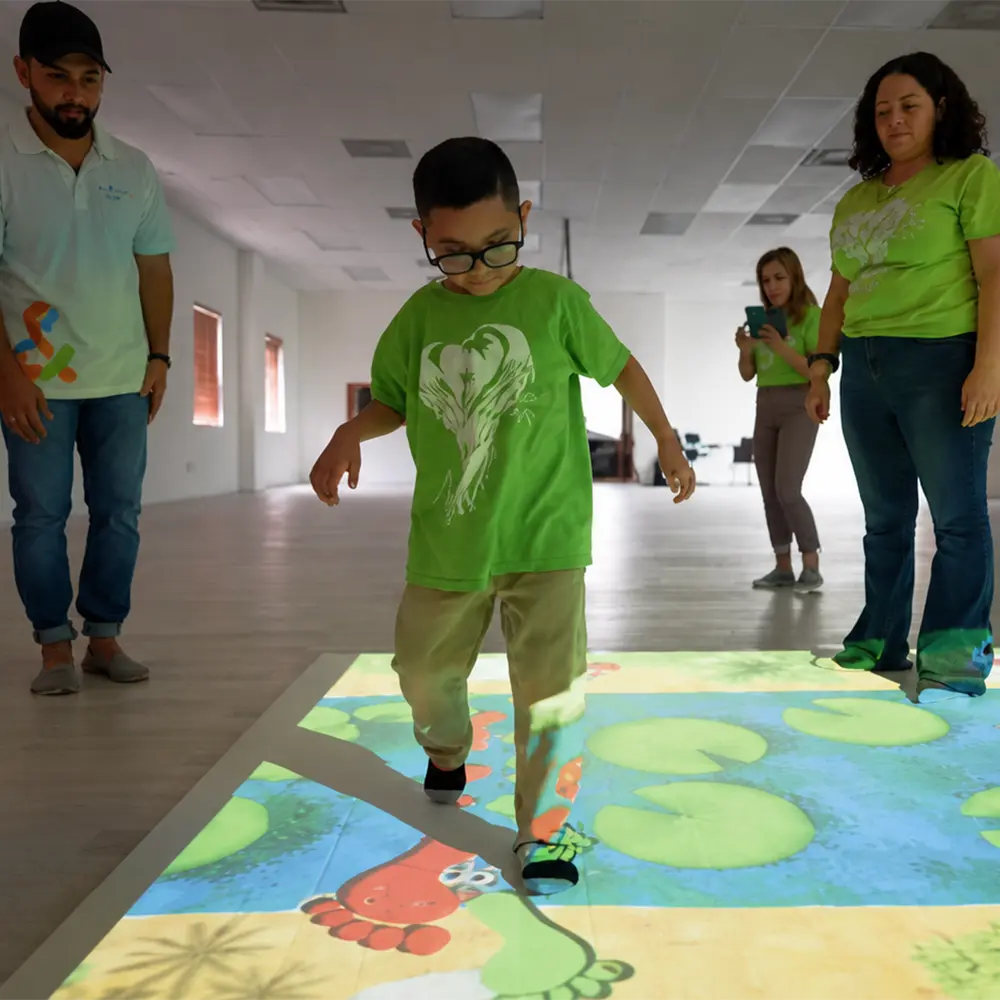
The interactive floor can become part of a multisensory environment that combines visual effects, sound, movement, and immediate cause-and-effect feedback.
Teachers, therapists, and other specialists can select activities according to the purpose and structure of each session. Different games may be used for active engagement, movement breaks, visual exploration, or structured sensory activities.
Therapy Centers
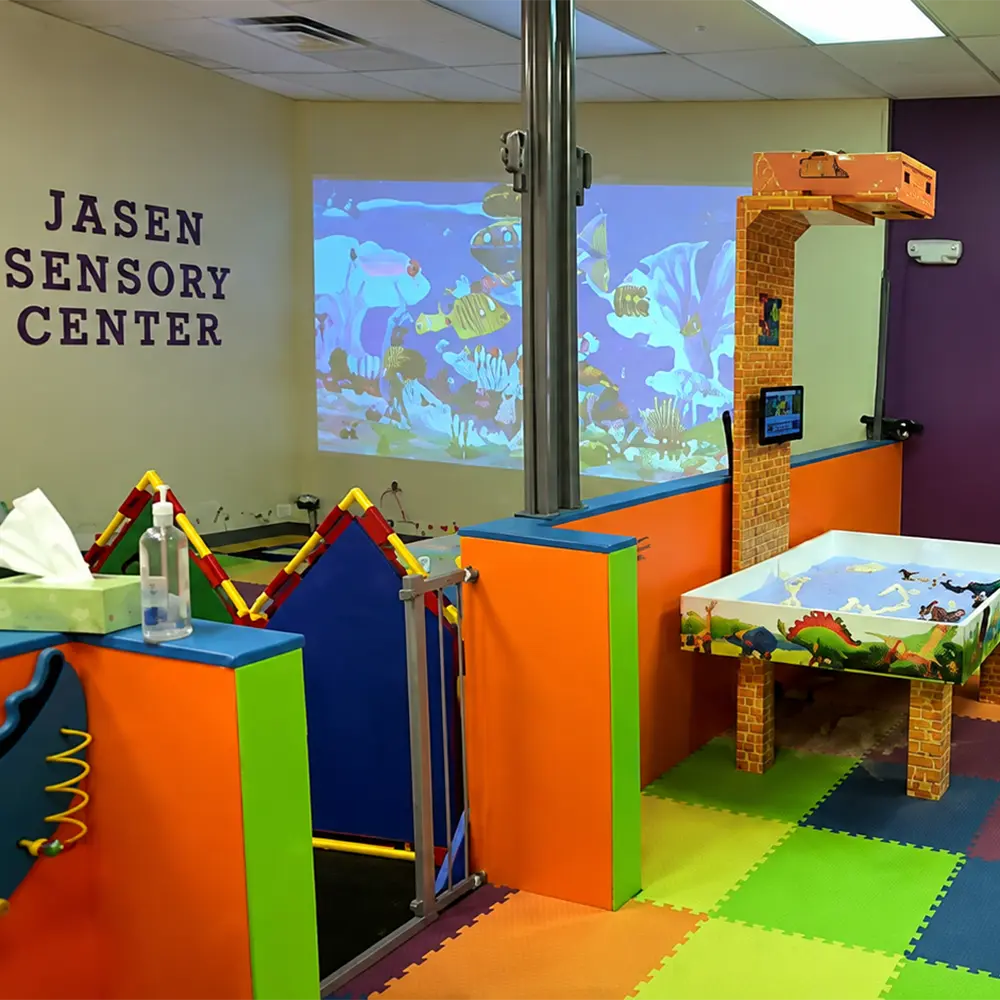
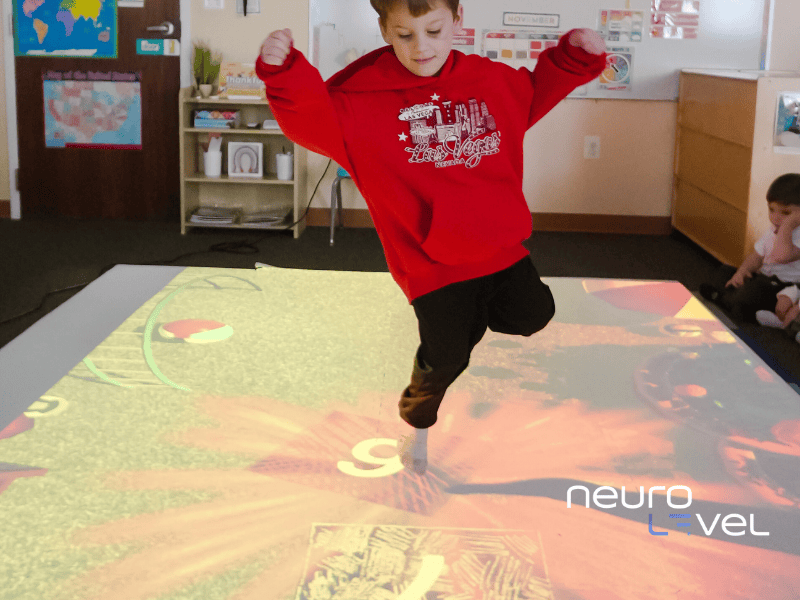
When incorporated into specialist-led OT, PT, ABA, or speech therapy sessions, the interactive sensory projector can serve as a powerful motivator. It allows a therapist to engage a group of children, including those with ADHD or ODD, in cooperative play while supporting social interaction, force modulation, and motor planning. Activities involving jumping may also provide proprioceptive input that supports body awareness and spatial orientation.
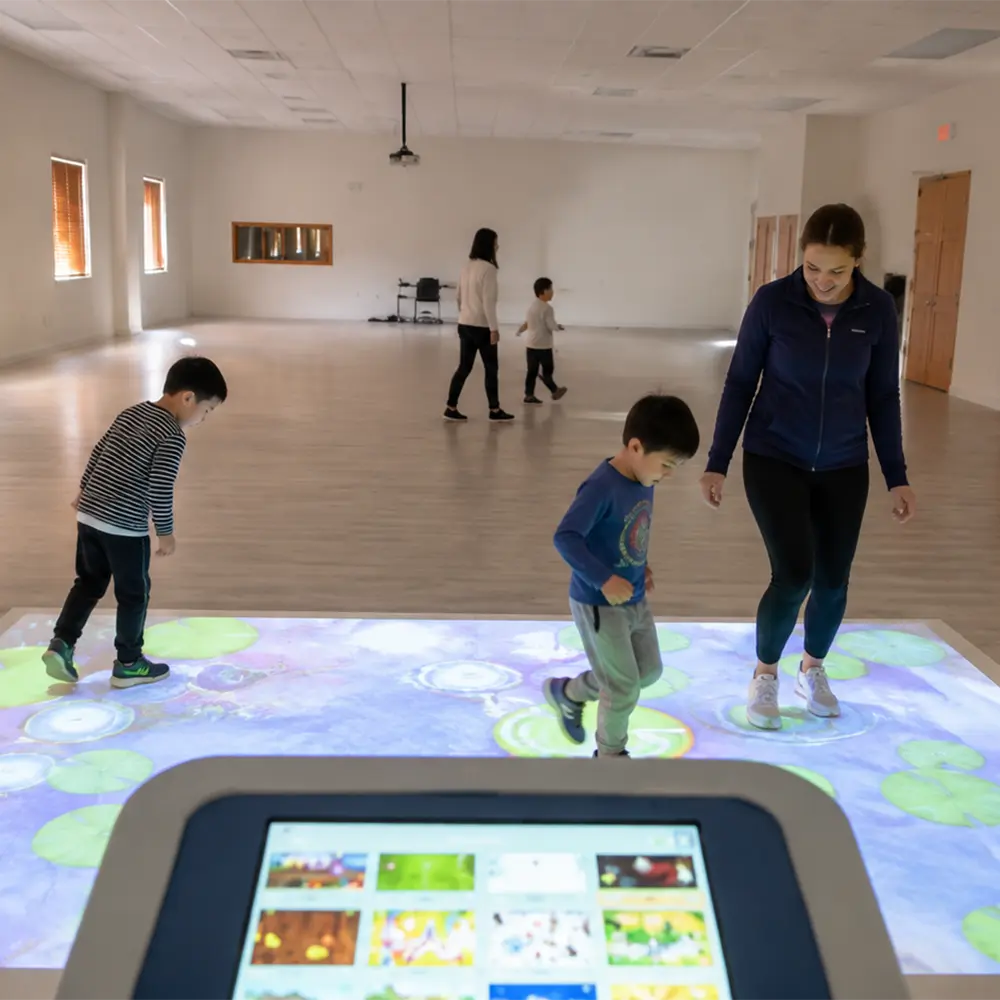
Preschools and Early Learning Centers
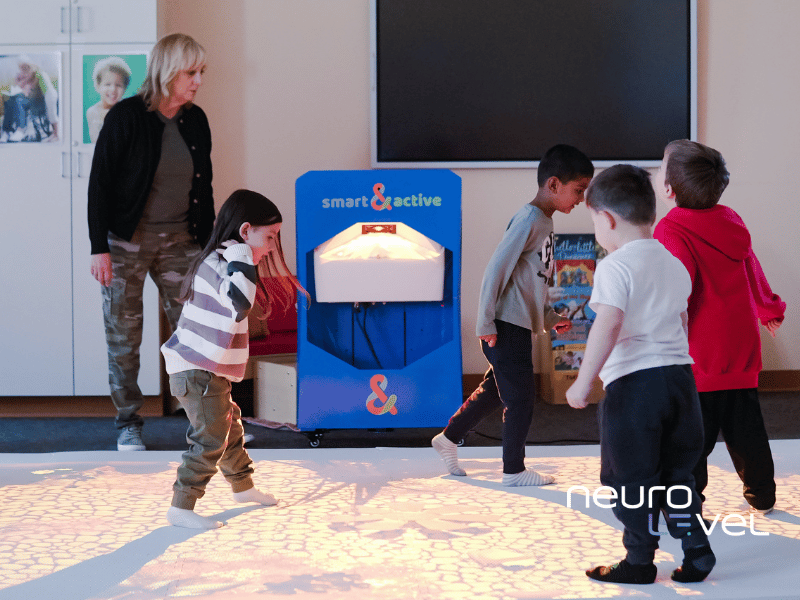
Young children can interact with educational content through movement and play. The floor-based format encourages participation and allows several children to engage with the same activity at once.
The system can be used for age-appropriate activities involving colors, shapes, numbers, letters, animals, nature, movement, and simple problem-solving.

Schools and Universities
Interactive floor activities can complement classroom instruction, physical education, inclusive programs, special education services, and recreational events.
Different models are available for standard classrooms, multipurpose spaces, and larger rooms such as gyms.
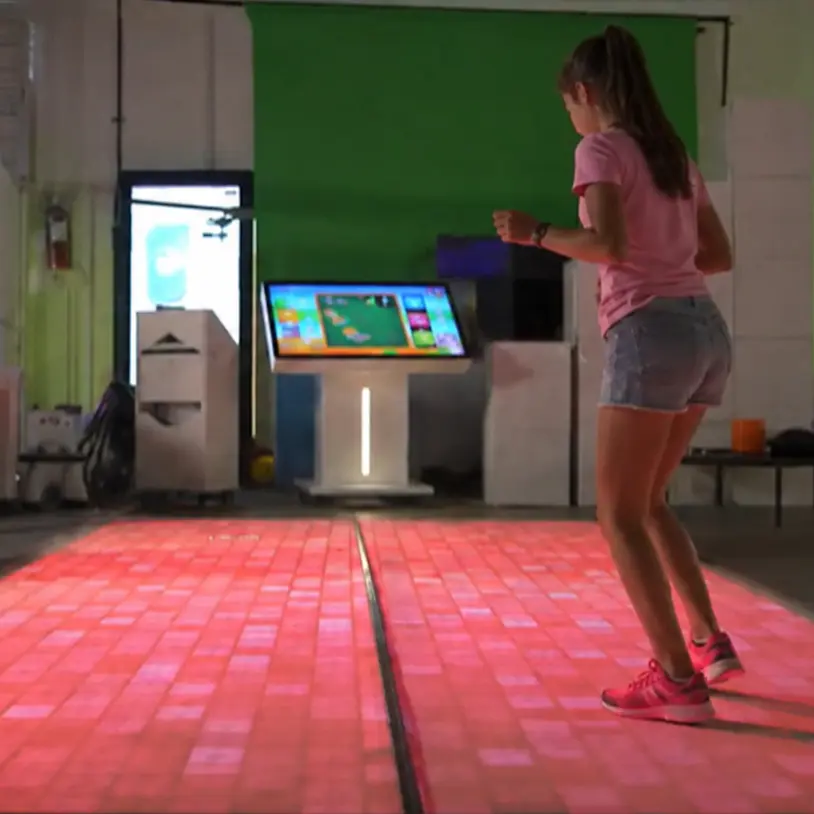
Rehabilitation and Healthcare Facilities
Specialists can use interactive projection for supervised activities focused on bilateral coordination, reflex integration, and visual attention. The software allows therapists to easily grade activities down by simplifying them or grade them up by increasing the difficulty, based on the user’s immediate physical or cognitive needs.
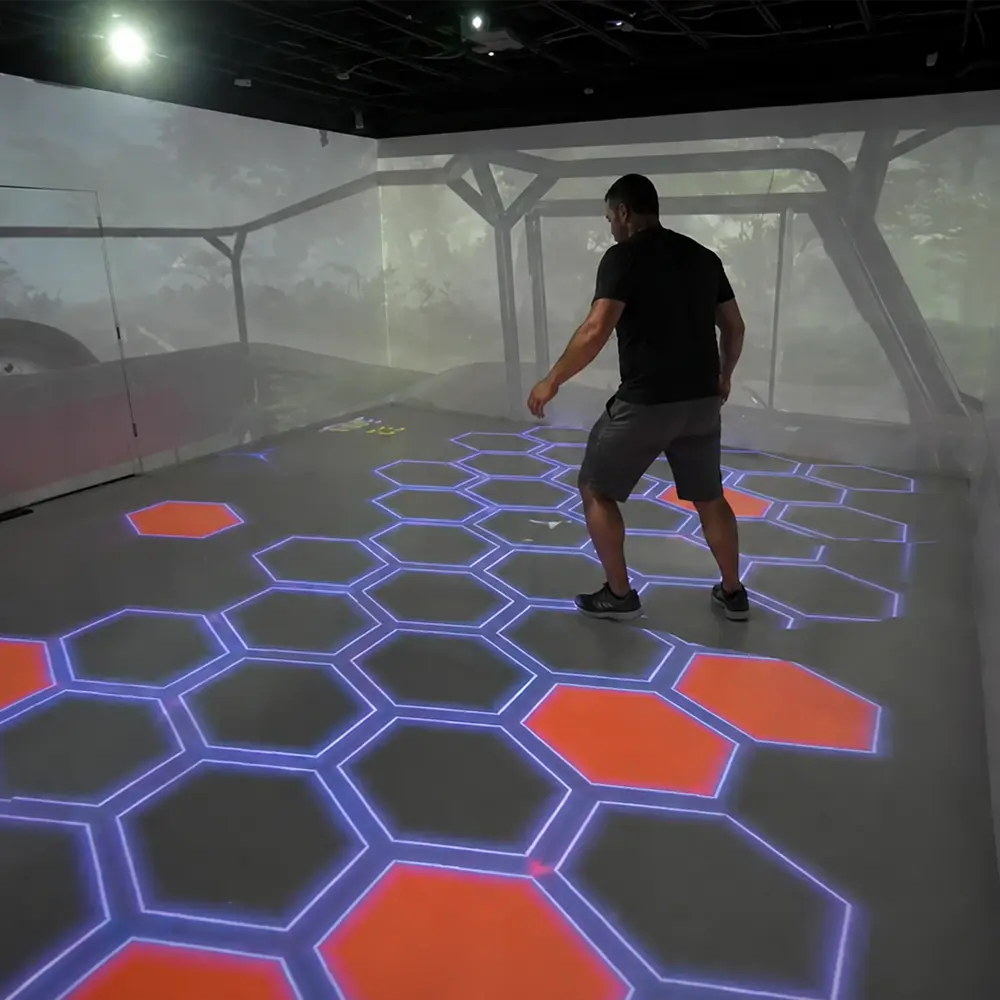
Recreation Centers and Indoor Play Spaces
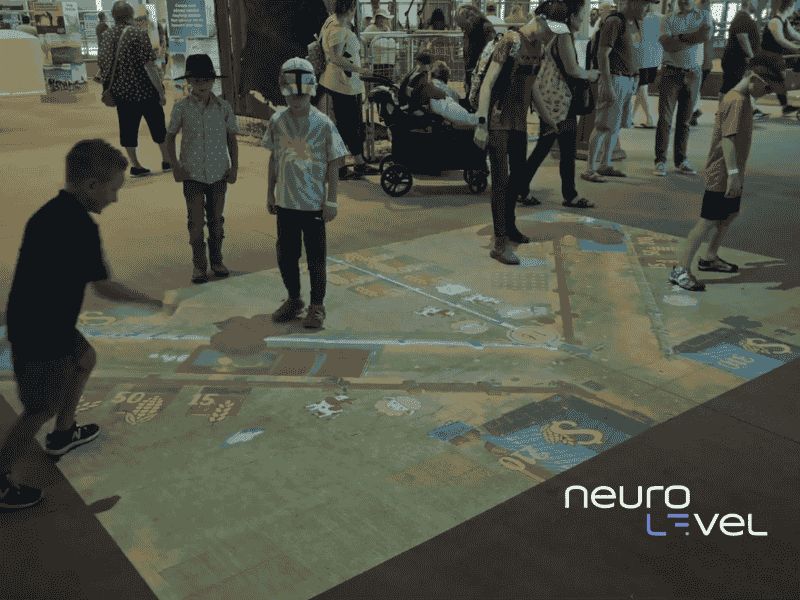
The sensory floor can also be used for entertainment, active games, group challenges, and interactive events. Its responsive format encourages users to move, explore, and play together.
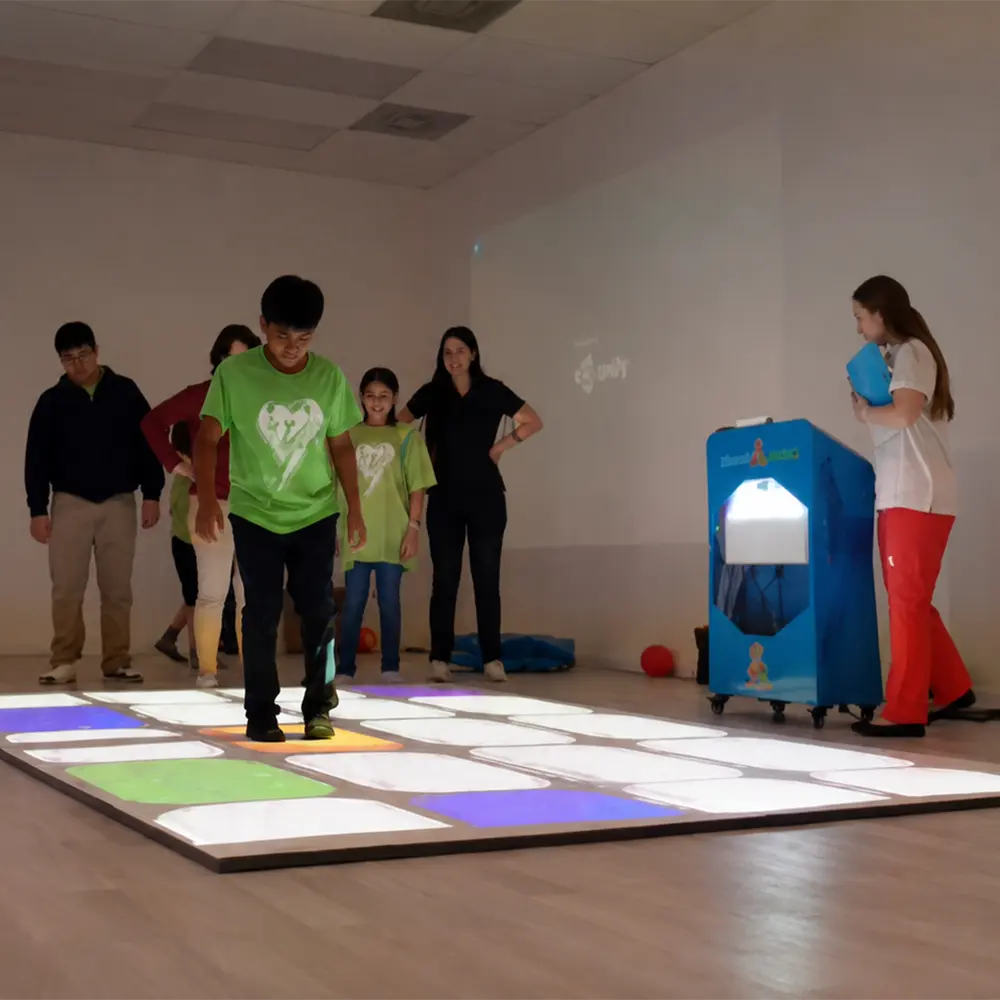
Home Learning and Activity Spaces
A sensory floor system may also be used at home for educational activities, active play, or reinforcing exercises recommended by teachers and specialists.
The mobile models are particularly suitable for spaces where permanent ceiling installation is not possible.
Models and Price
We have created different models of the Sensory Interactive Floor for various types of spaces and client needs:

83 Activities

Dimly lit environments

Ceiling
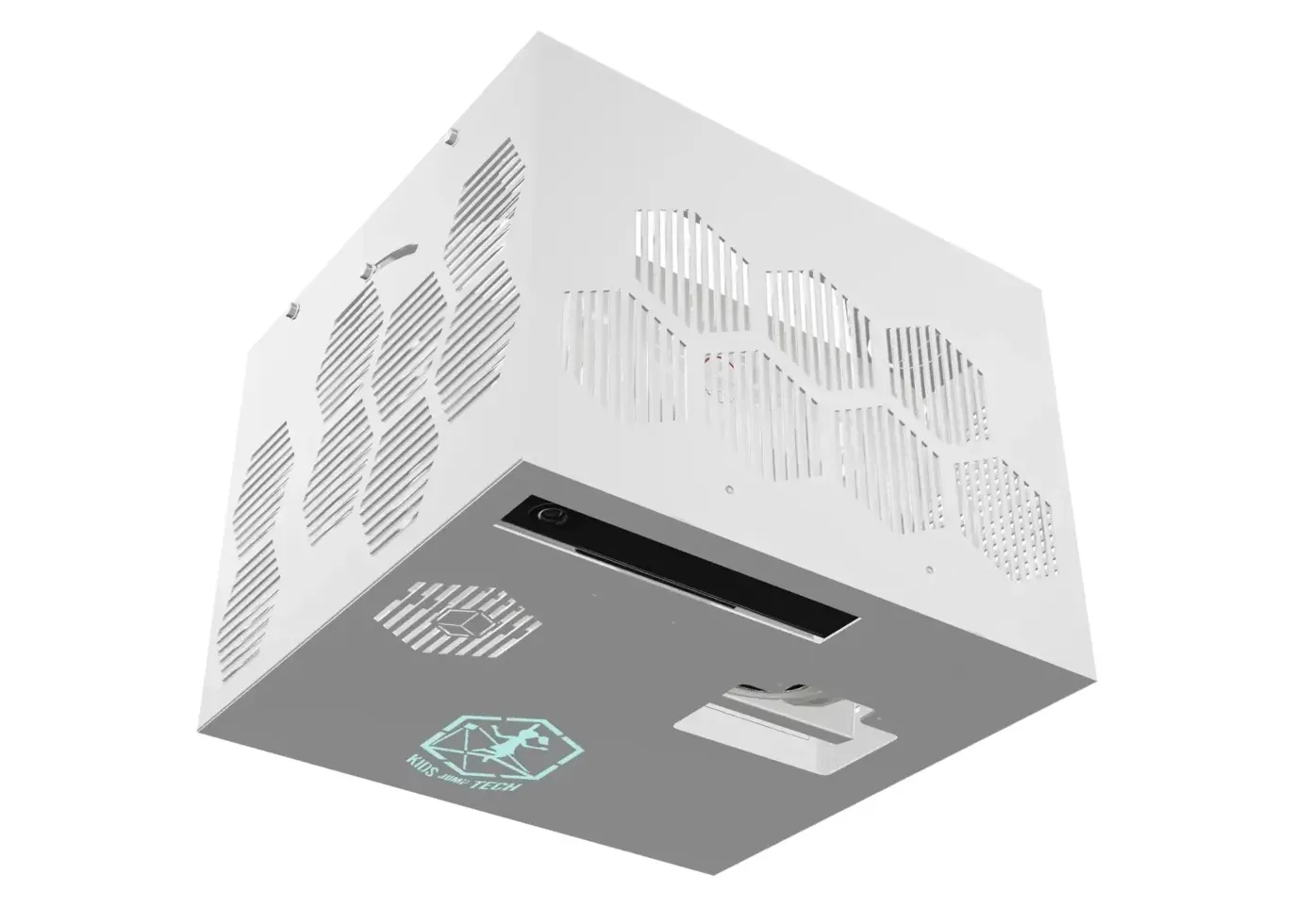
83 Activities
Standard room lighting
Ceiling
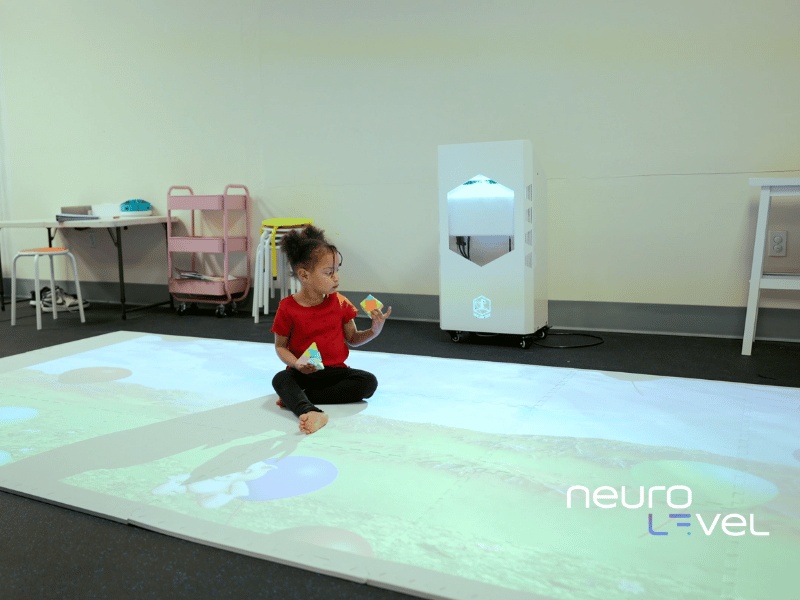
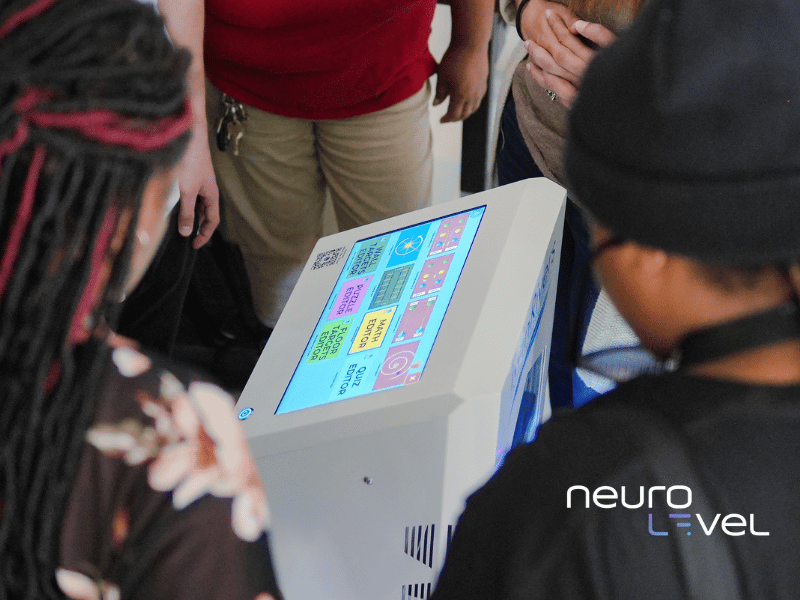
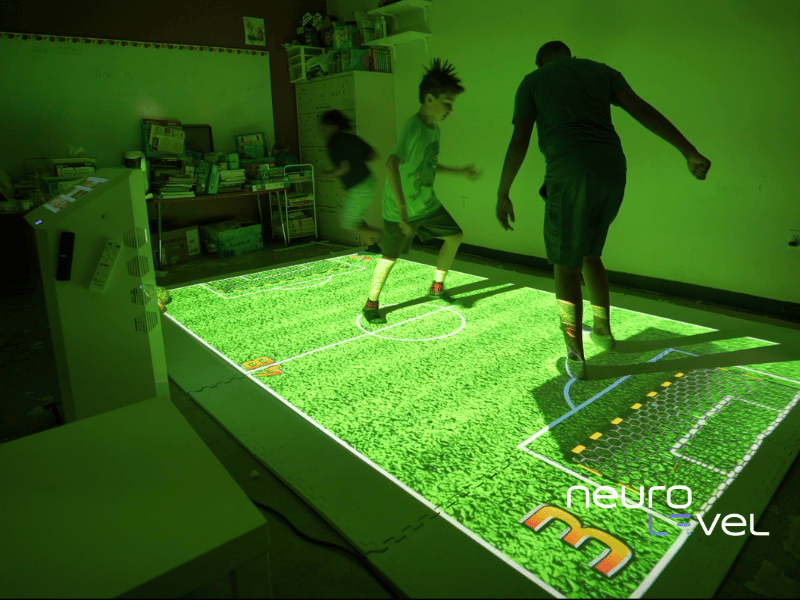
83 Activities
Dimly lit environments

Not required
Mobile
83 Activities
Bright room lighting
Not required
Mobile
83 Activities
Large, bright spaces
Ceiling


Not sure which model is right for your facility?
NeuroLevel can recommend a configuration based on your room dimensions, lighting conditions, intended use, and installation preferences.
Book a Discovery Call
The Only Metric That Matters:
Student Success
For us, statistics mean much more than just the number of installations. Behind every piece of equipment are real breakthroughs that change the lives of individuals of all ages and their families:
Made in the USA
NeuroLevel sensory floor systems are made in the USA.
Clinical Adaptability (Grading)
Our activity library allows practitioners to easily adjust the sensory load. Therapists can modify speed, visual clutter, and physical demands to accommodate hyper-responsive individuals, who may become overwhelmed easily, as well as hypo-responsive individuals who seek additional sensory input.
Mobile and Ceiling-Mounted Options
Organizations can choose between a permanently installed ceiling-mounted system and a mobile projector that requires no ceiling mounting. Mobile models are suitable for facilities that share equipment between classrooms, therapy rooms, event spaces, or different departments.
Multiple Models for Different Spaces
NeuroLevel provides stationary, mobile, standard-brightness, high-brightness, and large-area configurations. This allows customers to choose a system for: dark or dim rooms; rooms with ambient lighting; permanent ceiling installation; flexible use across multiple rooms; standard classrooms; large gyms and activity areas.
Adjustable Projection Size
The mobile Sensory Floor models allow the projection size to be adjusted according to the available floor area and room configuration.
More Than 80 Interactive Activities
Each standard Sensory Floor system includes more than 80 interactive floor games. The activity library supports educational use, movement-based play, sensory engagement, recreation, and group participation.
Custom Interactive Systems
When a standard model does not meet a facility’s requirements, NeuroLevel can develop a customized interactive projection system. The team can consider the size of the room, expected projection area, lighting conditions, installation limitations, and intended application.
Real-Time Motion Interaction
The system detects users’ movements and responds instantly, creating a direct connection between physical actions and projected content. This controller-free interaction means users do not need handheld devices, wearable sensors, or specialized technical skills to participate.
Online Demonstration and Consultation
Before selecting a system, customers can request an online demonstration and discuss their room, users, objectives, and technical requirements with the NeuroLevel team.
Which Interactive Sensory Floor Model Is Right for You?
| Model | Installation | Projector Brightness | Lighting Conditions | Recommended Use |
|---|---|---|---|---|
| Sensory Floor | Ceiling-mounted | 3000 lm | Dark or dim rooms | Classrooms, sensory rooms, and structured activity spaces |
| Sensory Floor Plus | Ceiling-mounted | 5000 lm | Rooms with ambient lighting | Frequently used classrooms, therapy rooms, and multipurpose spaces |
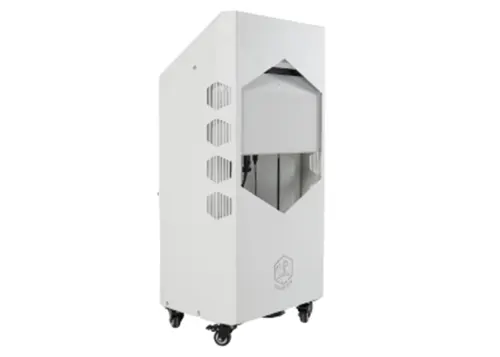
| Mobile Sensory Floor | Portable; no ceiling mounting required | 3000 lm | Dark or dim rooms | Organizations that need to move the system between rooms |
| Mobile Sensory Floor Plus | Portable; no ceiling mounting required | 5000 lm | Rooms with ambient lighting | Flexible multi-room use and spaces where permanent installation is not possible |
| GYM Floor | Ceiling-mounted | 7200 lm | Depends on room configuration | Gyms, large activity areas, and spacious recreational facilities |
Book a Consultation
All standard models include access to more than 80 interactive floor games. Mobile models also feature an adjustable projection size, allowing the system to fit different rooms and available floor areas.
Not sure which model is right for your facility? NeuroLevel can recommend a configuration based on your room dimensions, lighting conditions, intended use, and installation preferences.
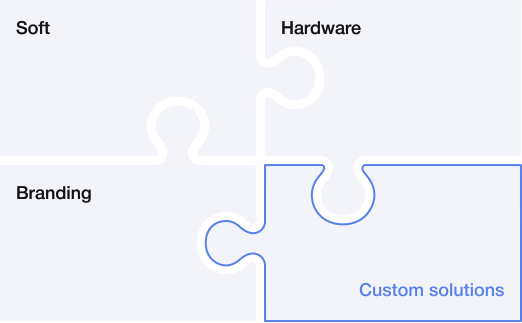
Custom Systems
If the ready-made models do not suit you, we are ready to create a customized project tailored to your needs. To do this, contact our team and describe what you're looking for.
How it Works?
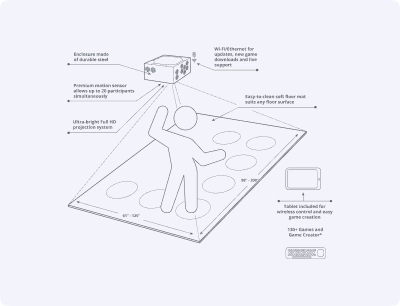
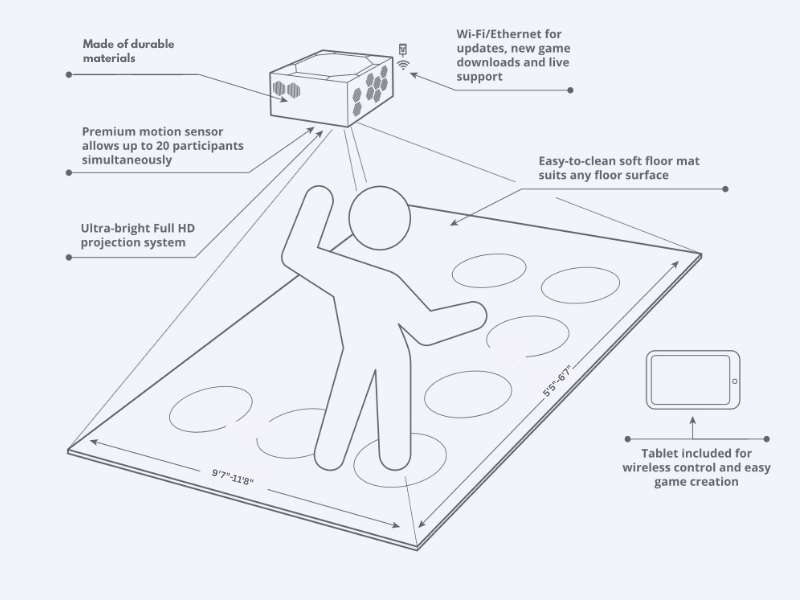
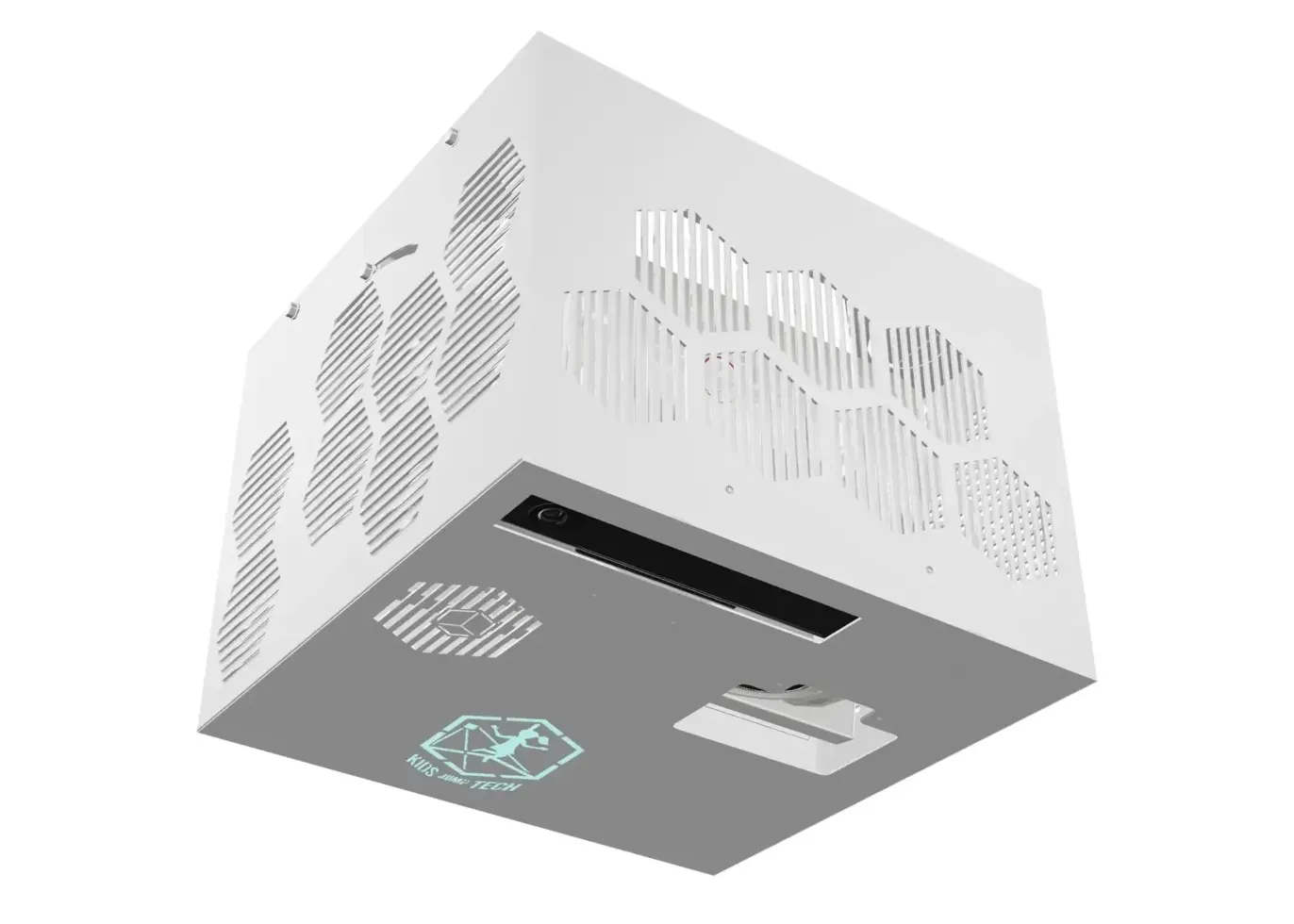
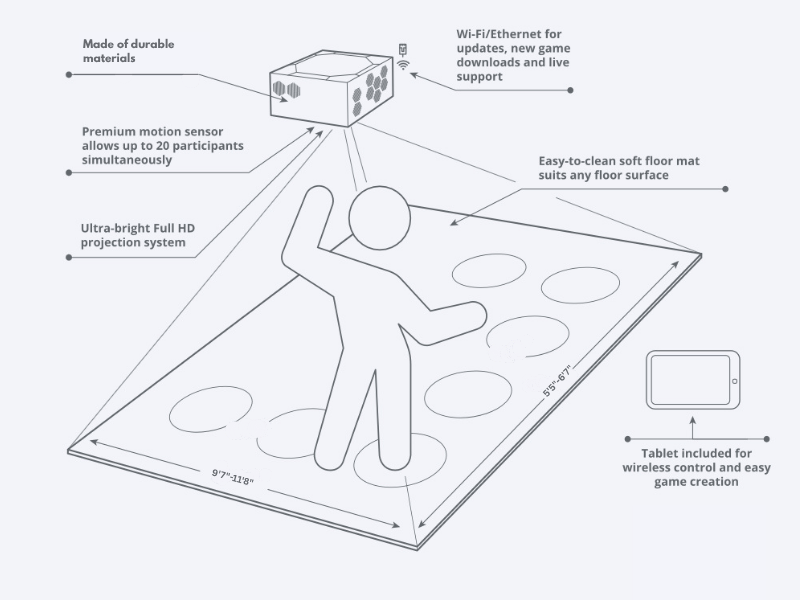
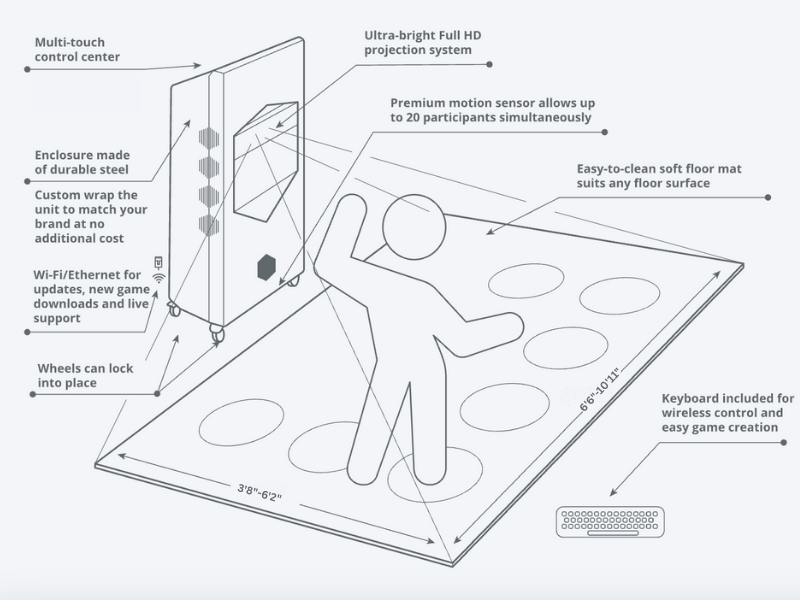
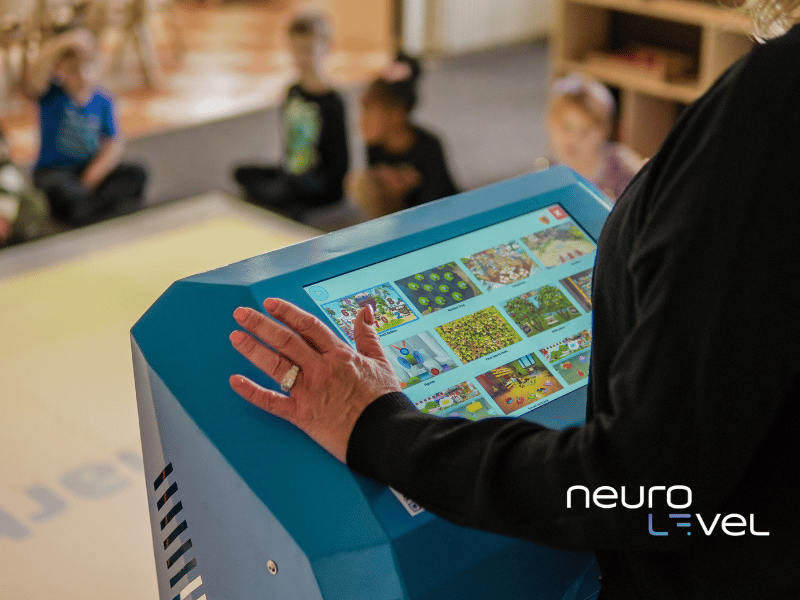
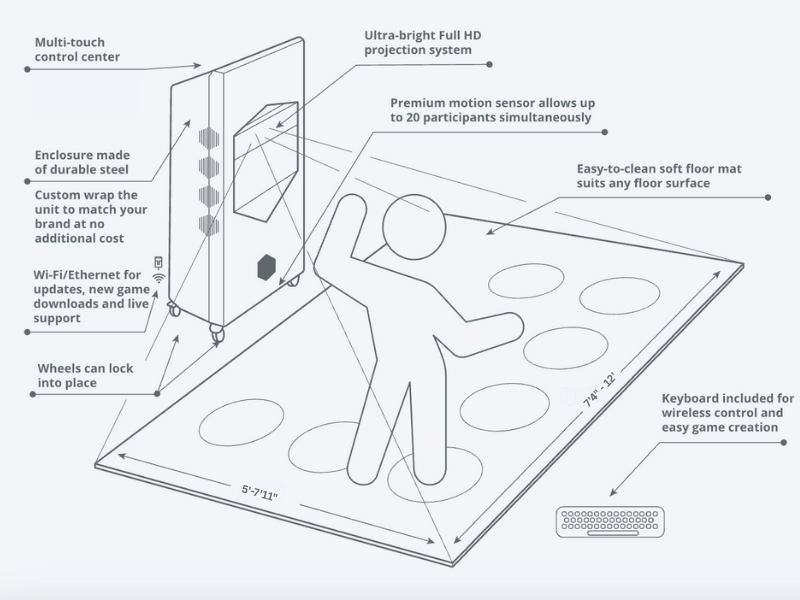
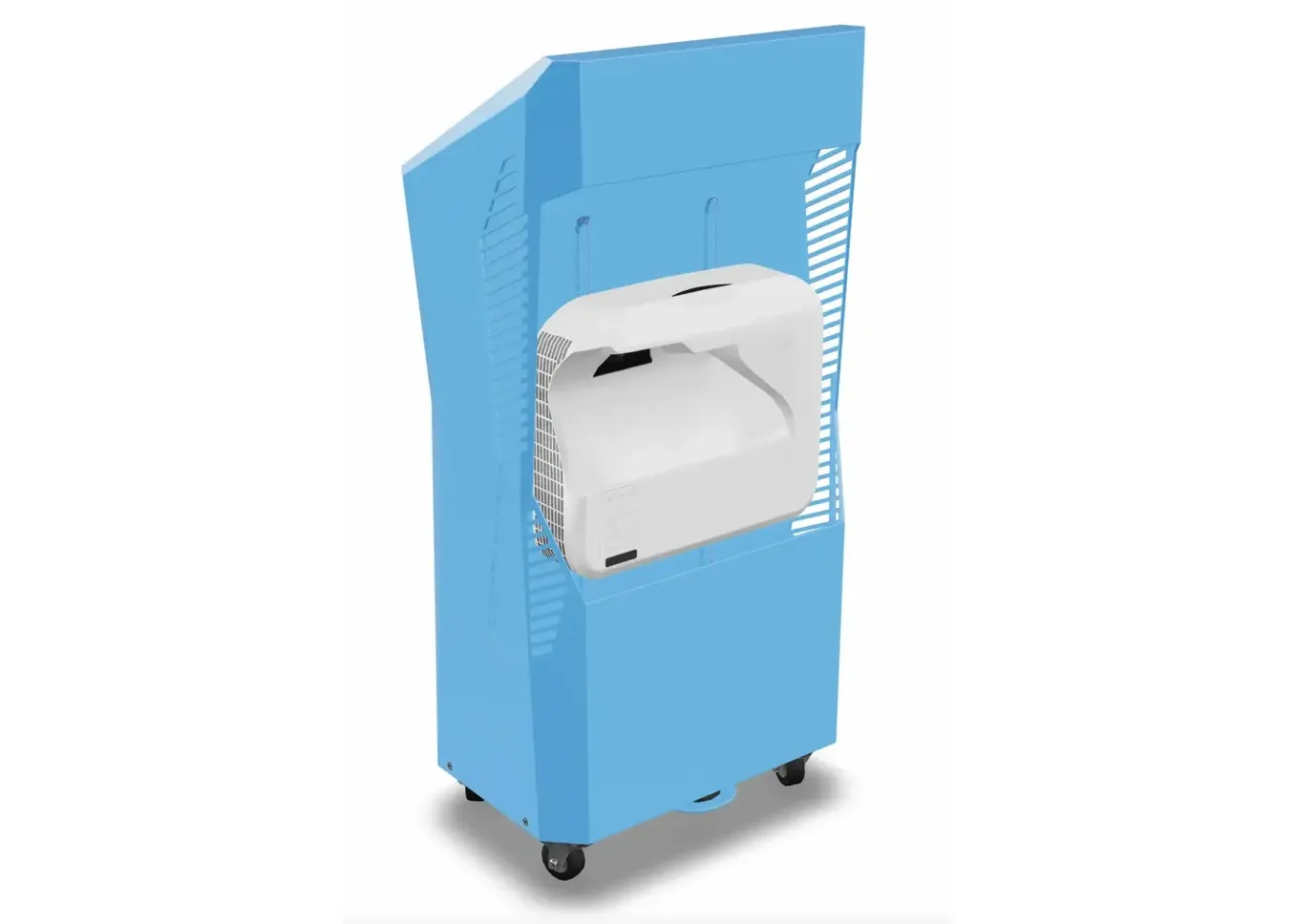
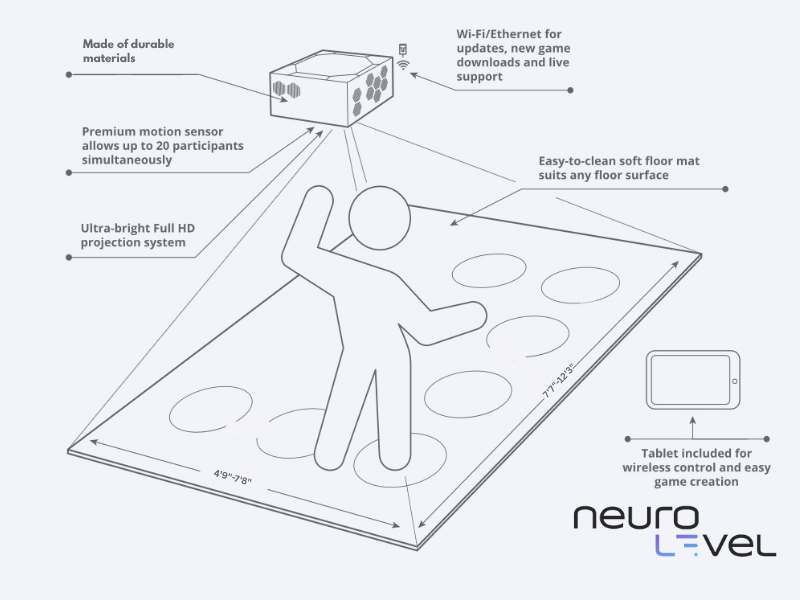
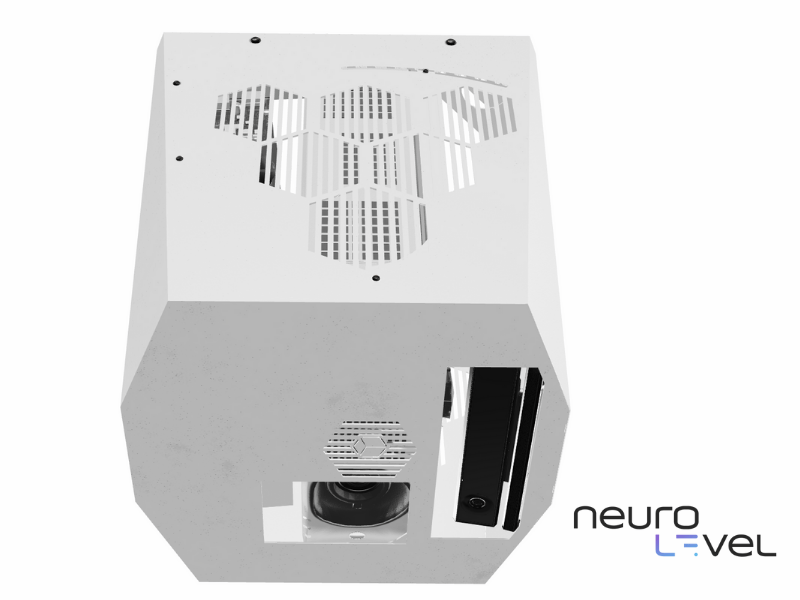
Our interactive floor combines a computer with our software, motion sensors, a projector and sound system all confined to a steel case.
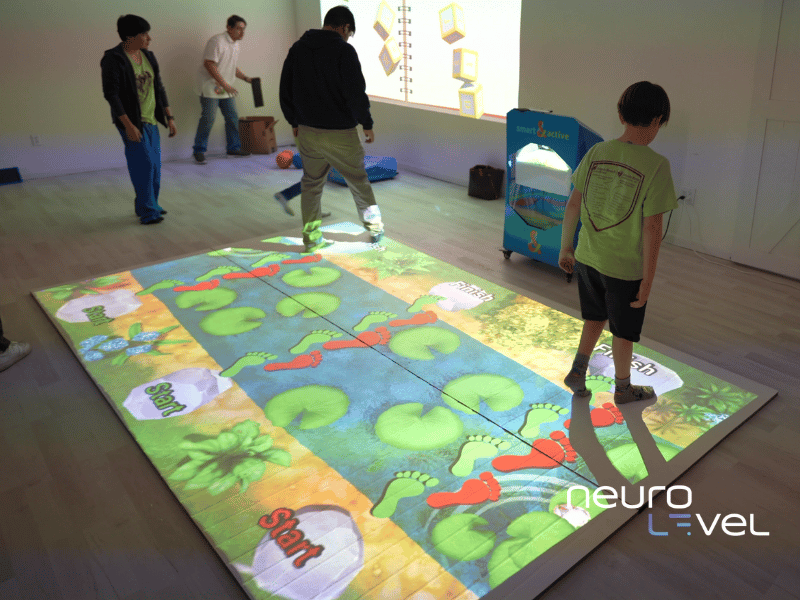
Selected games are displayed onto the floor from the projector.
During gameplay, the motion sensor detects every touch made by players. This information is transmitted into the computer. The computer responds instantly, ensuring precise interaction with characters and game scenes.
Inner ear
Internal
Hearing
Sight
Body awareness
Touch
Adaptability
One device allows you to launch educational, therapeutic, and entertainment games. The result depends on the chosen game: you can improve knowledge in school subjects, develop coordination and motor skills, master social skills, and much more. The equipment can be adapted to the educational programs of various specialists (such as therapists, teachers) or parents when organizing home education.

Inclusivity, Family
Why Choose NeuroLevel?
Choosing an interactive floor system requires more than simply comparing projector specifications. The equipment must provide clinical value, suit the room, align with the needs of its intended users, and adapt to lighting conditions, installation requirements, and planned activities.
NeuroLevel offers several advantages for schools, therapy centers, inclusive facilities, and recreational organizations.
[ 01 ]
Made in the USA
NeuroLevel sensory floor systems are made in the USA.
[ 02 ]
Clinical Adaptability (Grading)
Our activity library allows practitioners to easily adjust the sensory load. Therapists can modify speed, visual clutter, and physical demands to accommodate hyper-responsive individuals, who may become overwhelmed easily, as well as hypo-responsive individuals who seek additional sensory input.
[ 03 ]
Mobile and Ceiling-Mounted Options
Organizations can choose between a permanently installed ceiling-mounted system and a mobile projector that requires no ceiling mounting.
Mobile models are suitable for facilities that share equipment between classrooms, therapy rooms, event spaces, or different departments.
[ 04 ]
Multiple Models for Different Spaces
NeuroLevel provides stationary, mobile, standard-brightness, high-brightness, and large-area configurations. This allows customers to choose a system for:
dark or dim rooms;
rooms with ambient lighting;
permanent ceiling installation;
flexible use across multiple rooms;
standard classrooms;
large gyms and activity areas.
[ 05 ]
Adjustable Projection Size
The mobile Sensory Floor models allow the projection size to be adjusted according to the available floor area and room configuration.
[ 06 ]
More Than 80 Interactive Activities
Each standard Sensory Floor system includes more than 80 interactive floor games. The activity library supports educational use, movement-based play, sensory engagement, recreation, and group participation.
[ 07 ]
Custom Interactive Systems
When a standard model does not meet a facility’s requirements, NeuroLevel can develop a customized interactive projection system.
The team can consider the size of the room, expected projection area, lighting conditions, installation limitations, and intended application.
[ 08 ]
Real-Time Motion Interaction
The system detects users’ movements and responds instantly, creating a direct connection between physical actions and projected content.
This controller-free interaction means users do not need handheld devices, wearable sensors, or specialized technical skills to participate.
[ 09 ]
Online Demonstration and Consultation
Before selecting a system, customers can request an online demonstration and discuss their room, users, objectives, and technical requirements with the NeuroLevel team.
Reviews
NeuroLevel, a Kids Jump Tech project, partners with educators, therapists, and parents to enhance therapeutic and educational outcomes for individuals with special needs











FAQ
What is an interactive sensory floor projector?
How does the interactive sensory projector work?
What is the difference between an interactive sensory projector and a regular projector?
Do users need handheld controllers?
Where can an interactive sensory floor projector be used?
Is the Sensory Floor suitable for special education classrooms?
Activities should be selected according to the students’ needs, learning goals, and level of participation.
Can the system be used in therapy sessions?
It is an activity tool and does not replace professional assessment or therapy.
How many games are included?
Can several people use the interactive floor together?
Does the room need to be dark?
The standard Sensory Floor and Mobile Sensory Floor are intended for dark or dim rooms. The Sensory Floor Plus and Mobile Sensory Floor Plus use brighter 5000-lumen projectors and can operate in rooms with ambient lighting.
What is the difference between Sensory Floor and Sensory Floor Plus?
The standard Sensory Floor has a 3000-lumen projector and is designed for dark or dim spaces. Sensory Floor Plus has a 5000-lumen projector and is better suited to rooms with ambient lighting.
Do the mobile models require ceiling installation?
Can the projection size be adjusted?
Which model is suitable for a large gym?
What is included with the system?
Contact NeuroLevel for the exact component list for a specific model.
Does NeuroLevel offer custom systems?
How do I choose the right interactive sensory floor projector?
- • room size;
- • available projection area;
- • lighting conditions;
- • ceiling installation options;
- • whether the system needs to be mobile;
- • intended educational, therapeutic, or recreational use.
You can request a consultation or online demonstration to discuss the most appropriate configuration for your facility.
How much does an interactive sensory floor projector cost?
Contact NeuroLevel to receive a quote based on your facility and intended use.