


 Interactive Reading Games for Special Education
Some children recognize letters but can't combine them into words yet. Others understand the task but struggle with a spoken answer, holding a pencil, or sitting at a desk for long. Either way, the activity should let them practice the target skill and show what they already know.
NeuroLevel interactive equipment adds another way to practice reading: the child sees letters on the interactive surface and selects them through movement. The educator explains the task, helps the child understand mistakes, and ties game-based practice to reading on paper.
 Made in USA
 3 Years Warranty
 US based Support
Once you buy the equipment, the games are yours to use with no annual subscription, and updates are free.
What Reading Skills Can Students Practice?
Learning to read is a broad goal. For a single session, it helps to pick one specific step, so it's clearer which activity to use and what to watch for in the student's response.
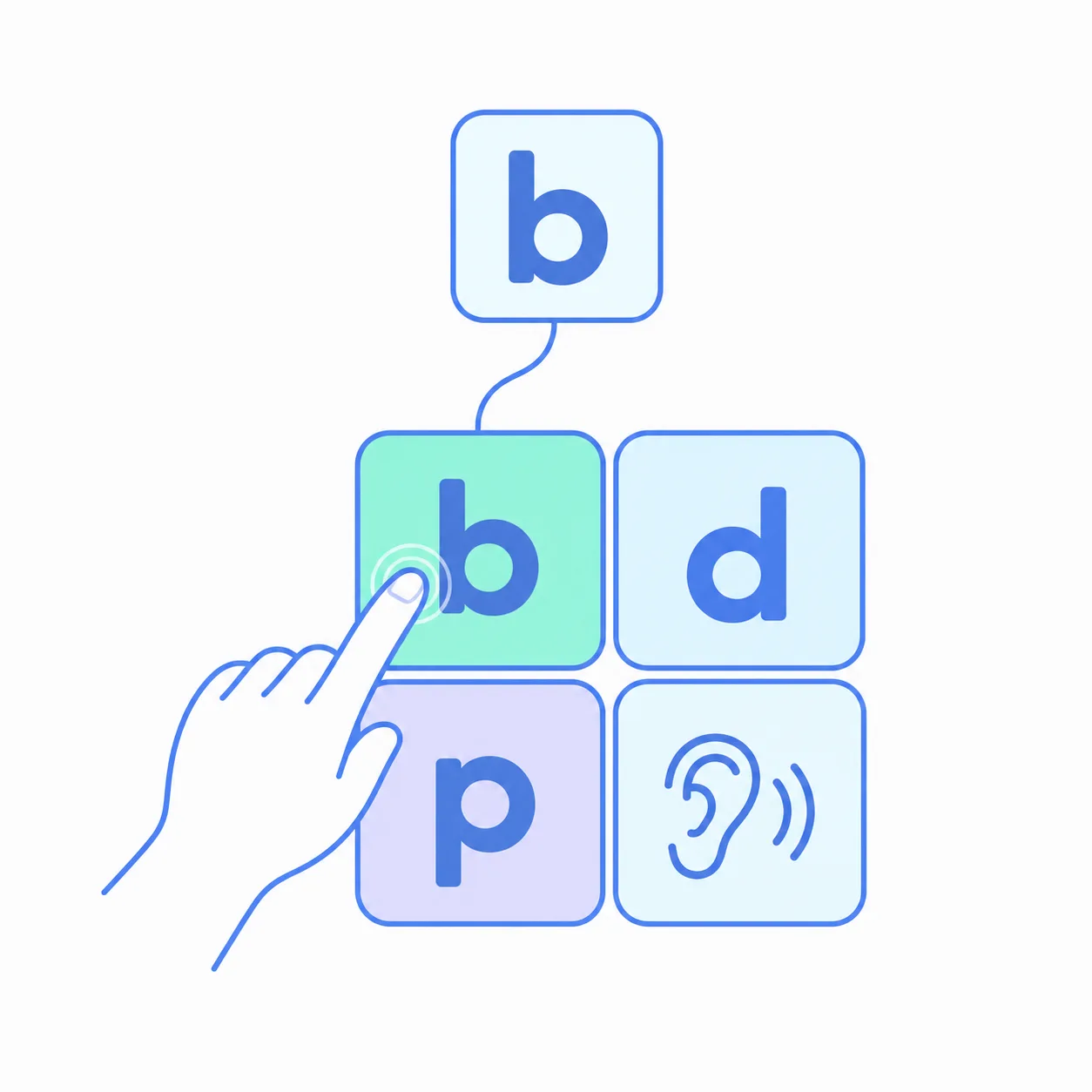
Letter Recognition
To recognize a letter, the brain has to pick out its shape and tell it apart from similar symbols.
Children with dyslexia or attention difficulties can find this hard. A child might struggle to reliably connect print to sound, miss visual details, or answer before looking closely at the options.
What Interactive Practice Adds: the educator asks the child to find a specific letter, and the child shows the choice by touching or stepping on it. Because the response is visible, the educator can go over an error right away and repeat the task. The goal is to identify the letter by its features, not memorize where it sits on the play area.
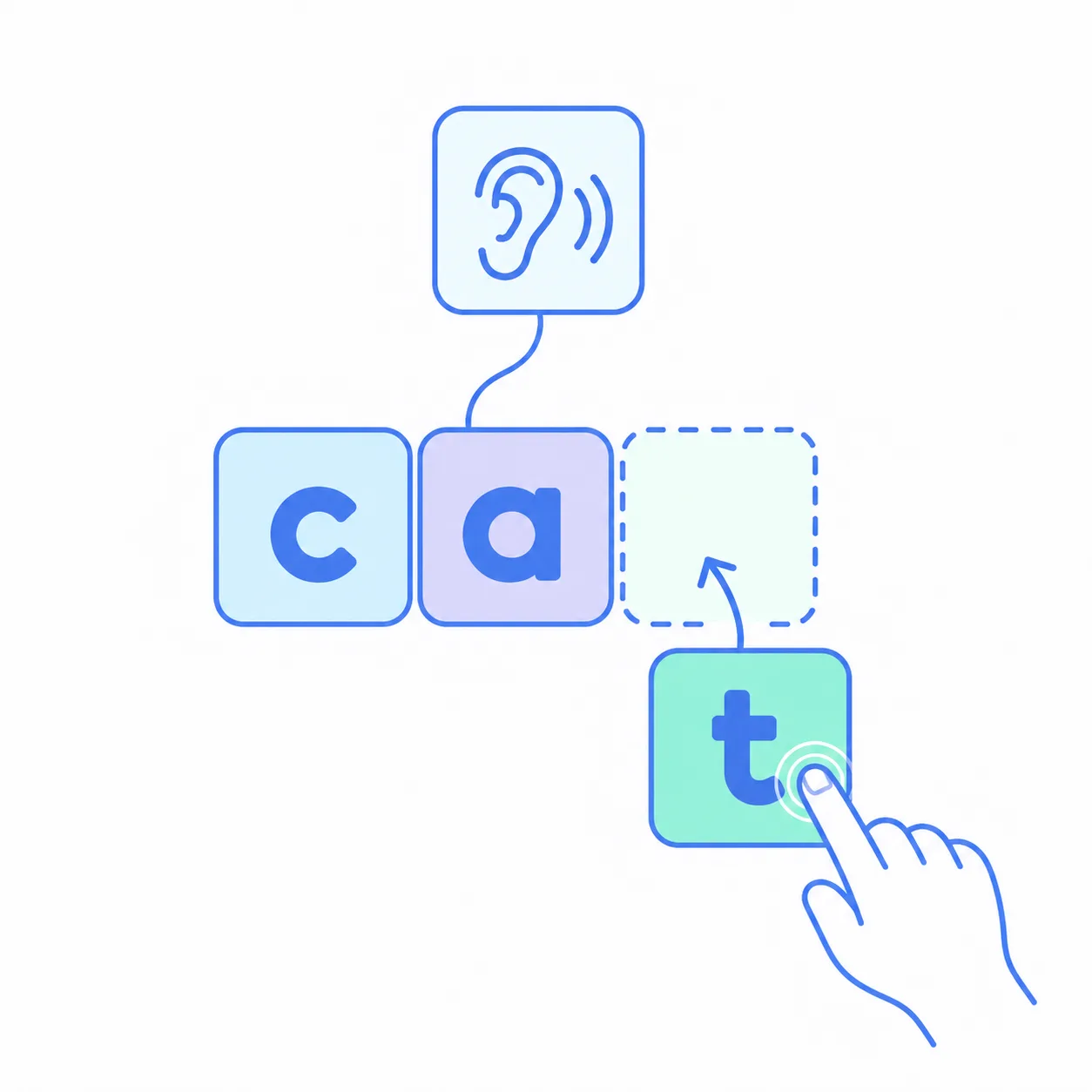
Word Building
To build a word that makes sense, the child needs to connect sounds to letters and keep them in order. This draws on language processing and working memory, the ability to briefly hold information while using it.
A child with dyslexia might struggle to isolate sounds and pick the matching letters. And a child with working-memory difficulties might forget the beginning of the word while working through the end.
What Interactive Practice Adds: the task can be broken into steps: hear the sound, choose the letter, and check its position. The educator models the process, then the student tries it on their own. Movement becomes the way they respond.

Connecting Print and Meaning
Reading a word and understanding it are two different tasks. Comprehension means connecting print to the child's language, knowledge, and experience.
Some children with autism can pronounce written words accurately but struggle to explain what they mean. And a child who doesn't use spoken language might understand a word even if they can't read it aloud.
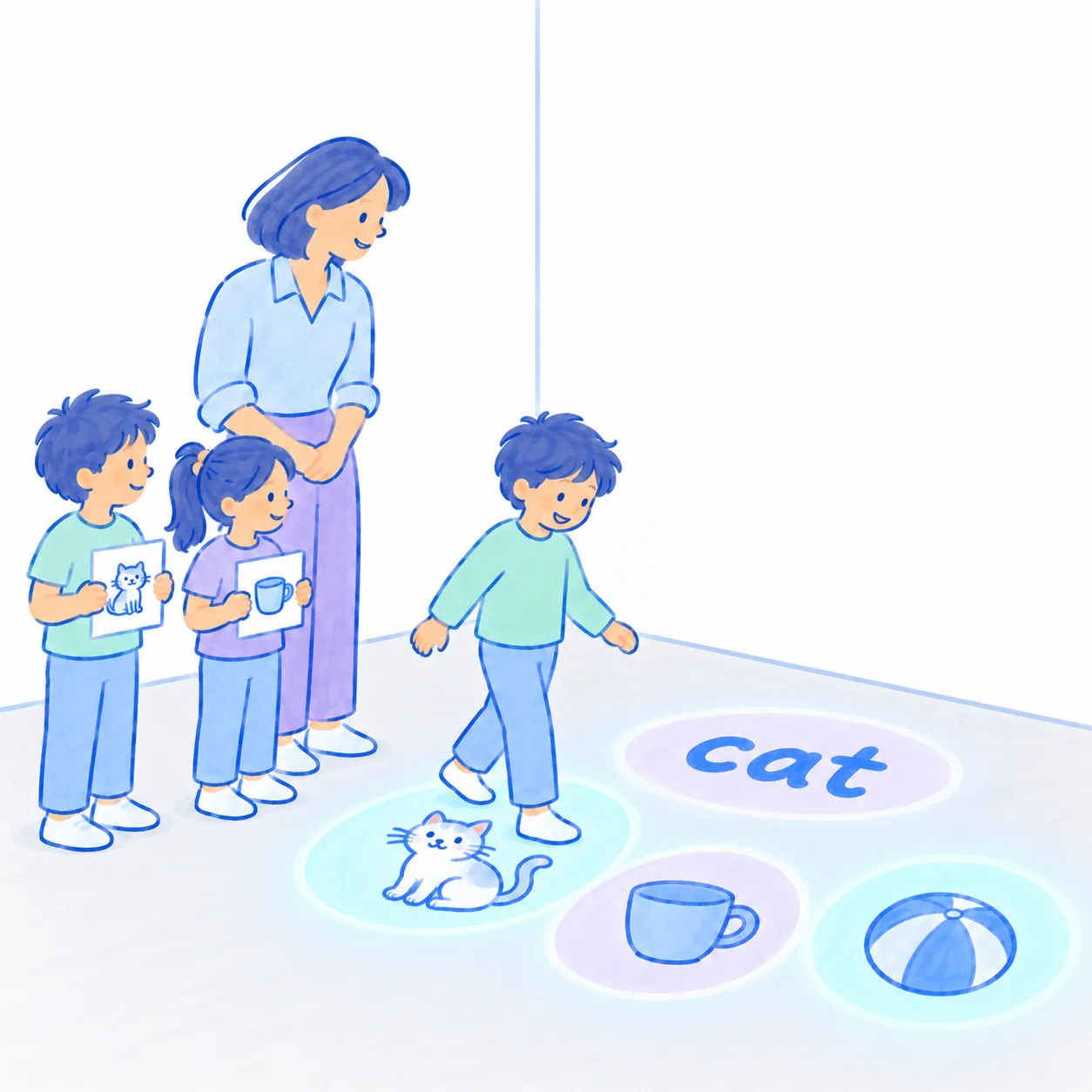
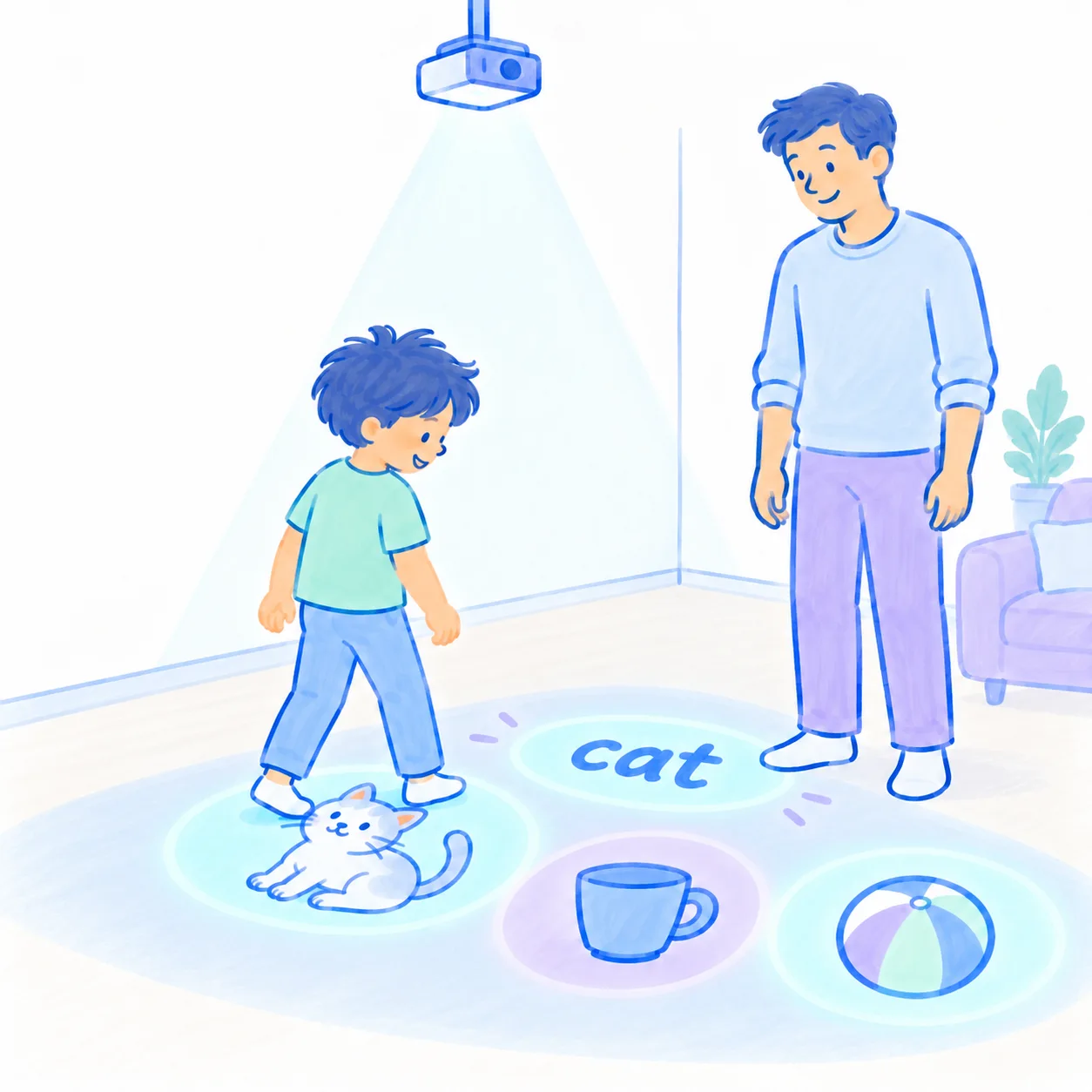
What Interactive Practice Adds: when the child makes a choice, you can actually see understanding. After working with a word, the educator asks the child to match it to an object or image. To check reading itself, the word appears first without a picture cue. The child can respond in whatever way works for them, like pointing.
Explore NeuroLevel Reading Games
We offer demonstrations of our games in real settings, so you can see how the activities are structured, what the child does, and how the game responds to each choice. Below are examples of NeuroLevel games for reading practice.
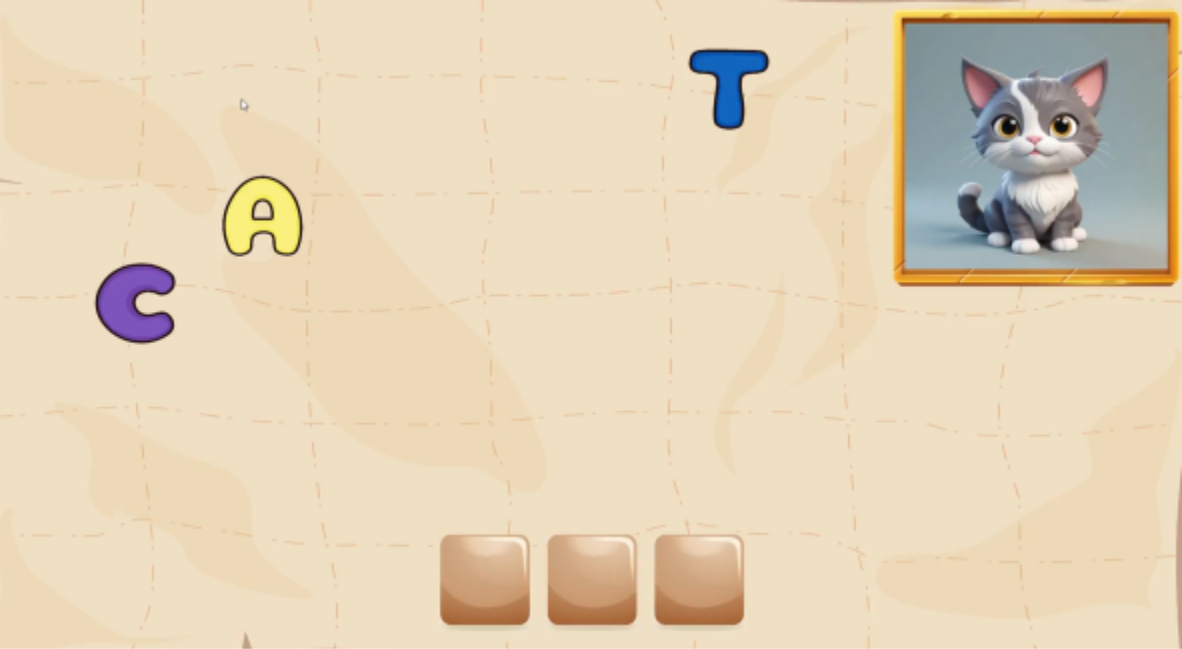
Skills: Literacy Development, Physical engagement, Word recognition, Phonemic awareness
During the demo, we will show the games in action and discuss how they can fit into your instructional program.
How to Build a Reading Practice Session
The game lets the child put the educator's explanation to use right away by choosing a letter, building a word, and seeing the result. Practicing through movement also helps the educator see where the student works independently and where they need support. After the game, working with a card or book reinforces the skill with different material.
1. Choose One Clear Outcome
Before explaining the task, try a short trial with accessible material. It shows where to start: recognizing several learned letters, building a familiar word, or reading it without a picture cue.
Specific steps work better than a broad goal like “work on reading.”
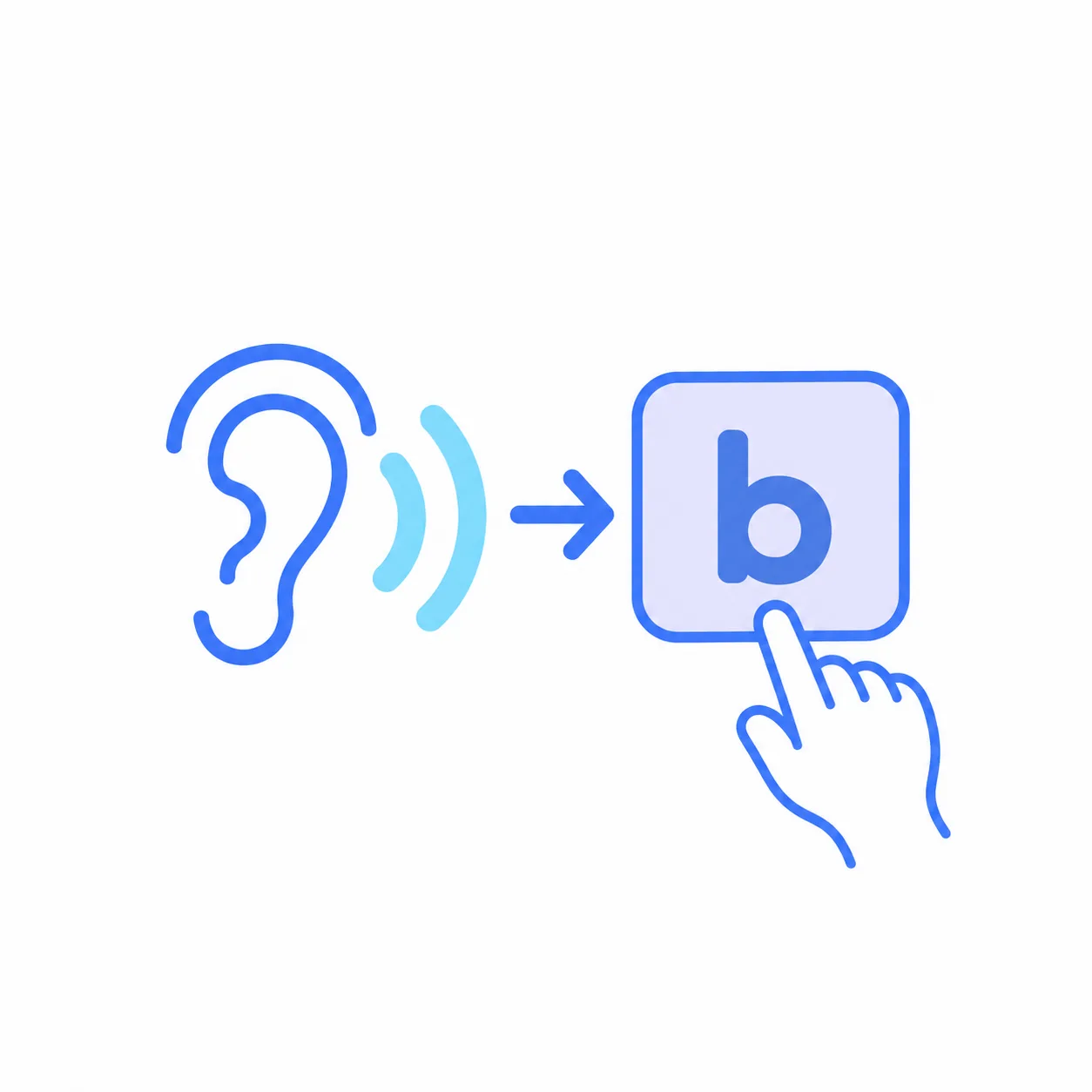
2. Model the Problem-Solving Process
Walk through one example and explain what to look for. When working on letter-sound correspondence, just pointing out the correct answer isn’t enough. The child needs to understand how you got there.
For example, the educator isolates a sound in a word and shows the matching letter. If the goal is to compare letters to a model, the educator explains which parts of their shapes should line up.
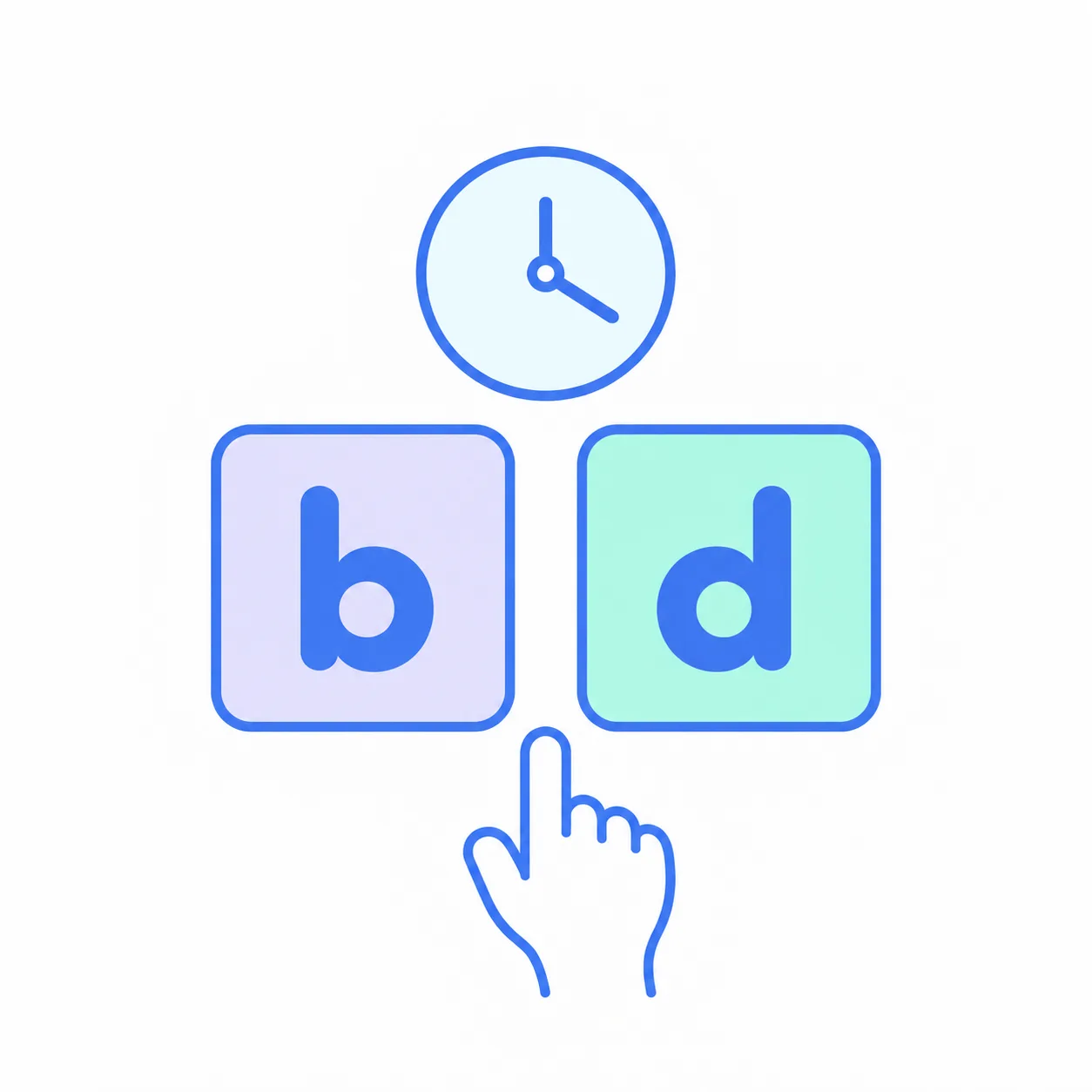
3. Give the Child Time to Make a Choice
During the game, give the child time to look and respond. If the adult points to the correct letter right away, you can’t tell if the student had time to decide on their own.

4. Review the Error
If the student makes a mistake, go back to the step that tripped them up. If they mixed up similar letters, compare them. If they lost track of the sequence, show where to pick up in the word.
After explaining, offer another try and fade support. Otherwise, the child ends up practicing following prompts instead of showing independent problem solving.
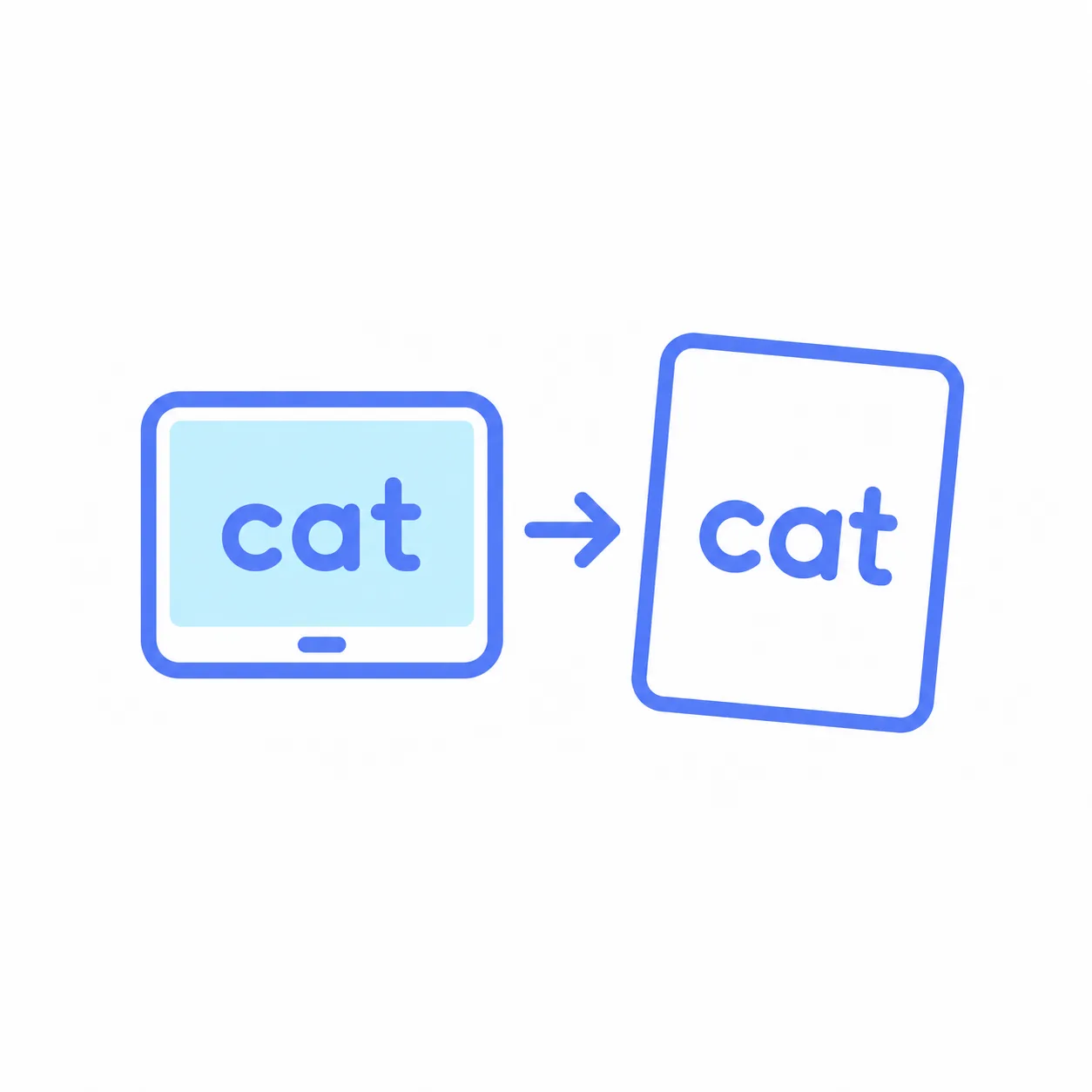
5. Move to Printed Material
Show the same word on a card. If the child gets it right, offer another example using letters and letter-sound correspondences they already know.
This ties the game-based activity to conventional reading and shows if the skill holds up without the familiar picture, object placement, or game feedback.
Adapt the Activity to the Student’s Access Needs
Participation and Communication for Students With Speech Difficulties
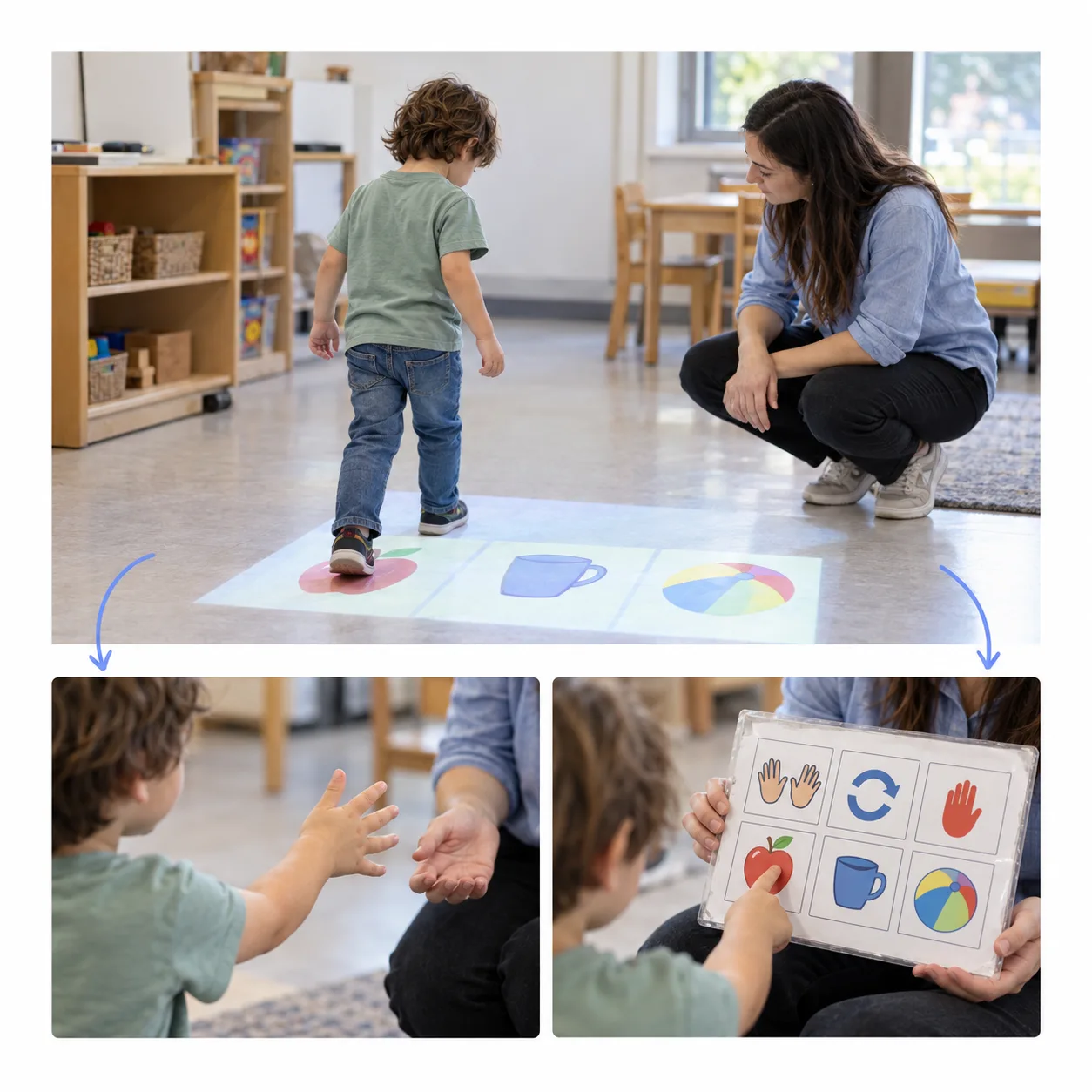
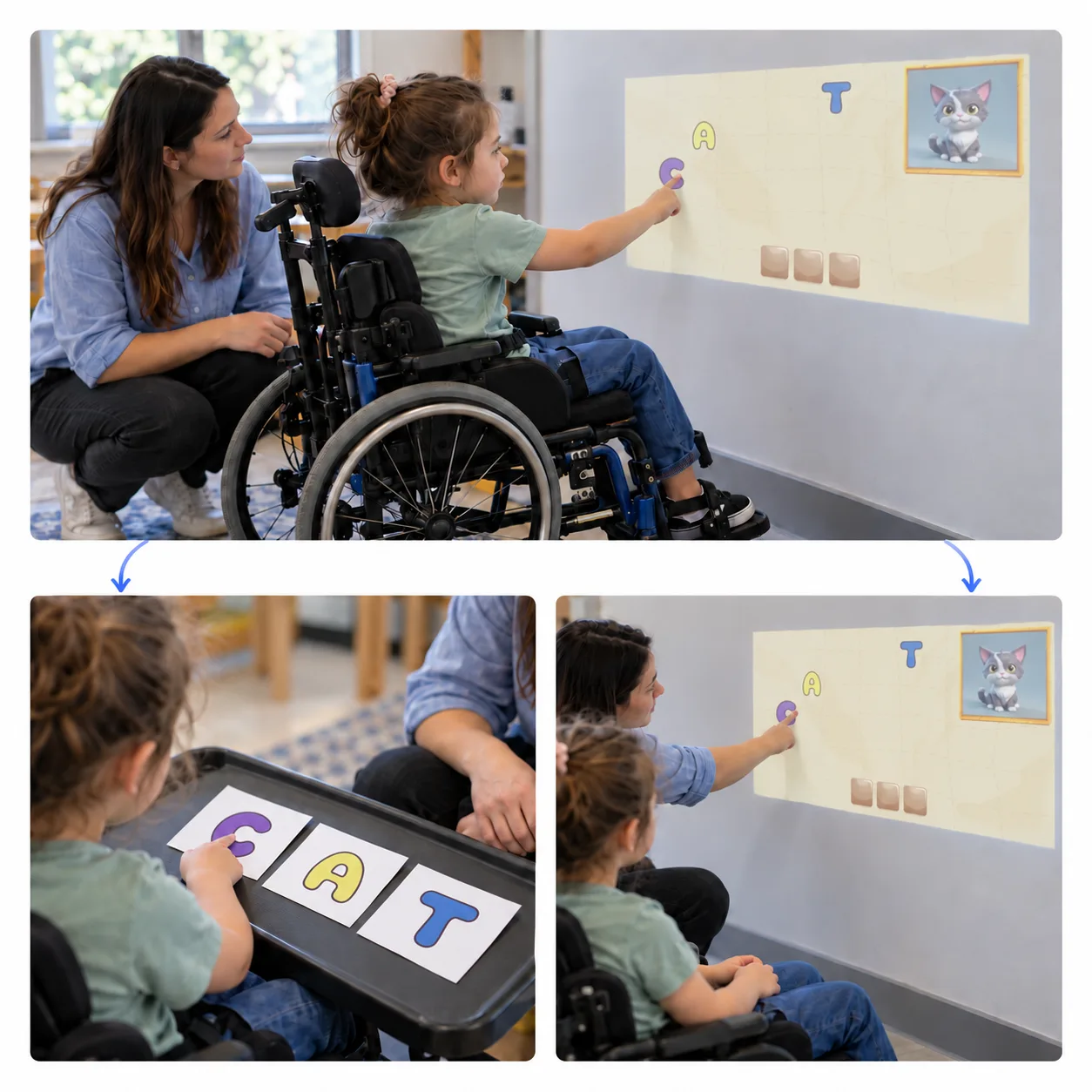
In an interactive activity, the child can show an answer through an action, like selecting a letter or touching the target object. That way, they can still take part even when speaking is difficult.
Shared play also gives the child reasons to communicate: asking to continue, naming an object, or requesting help. The educator pairs the action with a short word or phrase and supports whatever response works for the child, through speech, gesture, or their familiar AAC system. This ties reading practice to meaningful interaction.
Practice Adapted to Motor Abilities
The child doesn't need to move a lot to take part. A hand touch can count as the response in the game, and our team helps you pick equipment and an interaction format that fits the child's available movements.
If the child needs physical help, an adult can carry out the action based on what the child clearly shows them. The student is still the one making the decision.
Gradual Introduction for Sensory-Sensitive Students
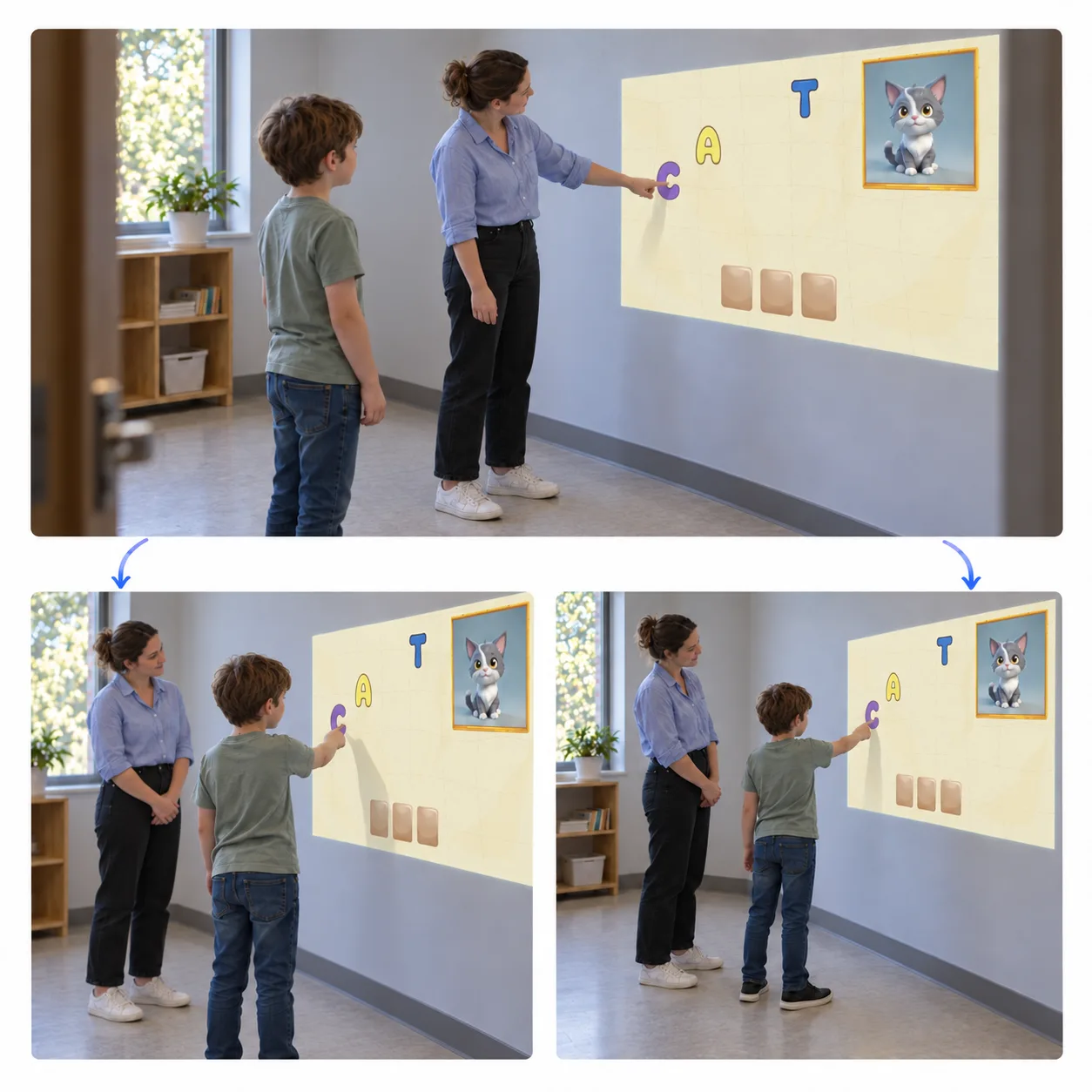
The child can get used to the interactive environment step by step: first watching the adult use it, then trying one touch, and then moving on to a short activity. The educator adjusts the game, duration, breaks, sound level, and visual brightness based on how the child responds.
Seeing the connection between "my action" and the game response can make the activity feel more predictable. Repeating a familiar scenario gives the child time to get comfortable with the format before trying new tasks.
It’s useful to track three different types of change:
Generalization:
Can the student complete a similar task with different material and without familiar game supports?
Accuracy:
How many target actions does the student complete on their own, and which errors keep coming up?
Participation:
Does the student start the task and come back to it after a break?
Develop a Game Around Your Students’ IEP Goals
If none of our existing games cover the learning task you need, the NeuroLevel team can build a separate scenario aligned with an Individualized Education Program (IEP). It could target letter recognition, word building, or matching written words to images, for example.
The educator defines what the child is learning and what support they need. Together, we work out the task content, response mode, and the feedback that follows the student's choice. The specialist ends up with a game-based activity for a specific goal, one that accounts for the child's communication, motor, and sensory needs.
What Does Research Say About Interactive Reading Practice?
How can movement tie into letter learning? Can a child who struggles with speaking practice reading? When does a prompt help, and when is it time to let the student respond on their own?
Research helps answer these questions and shapes how NeuroLevel practice is organized.
Movement Becomes Part of the Reading Task
What the Study Examined
Ben Dhia and colleagues studied 24 children with dyslexia. For eight weeks, half of them combined letter activities with movement, like naming letters while passing a ball or tracing letter outlines with their bodies. That group saw better word-reading results.
How We Apply a Similar Principle
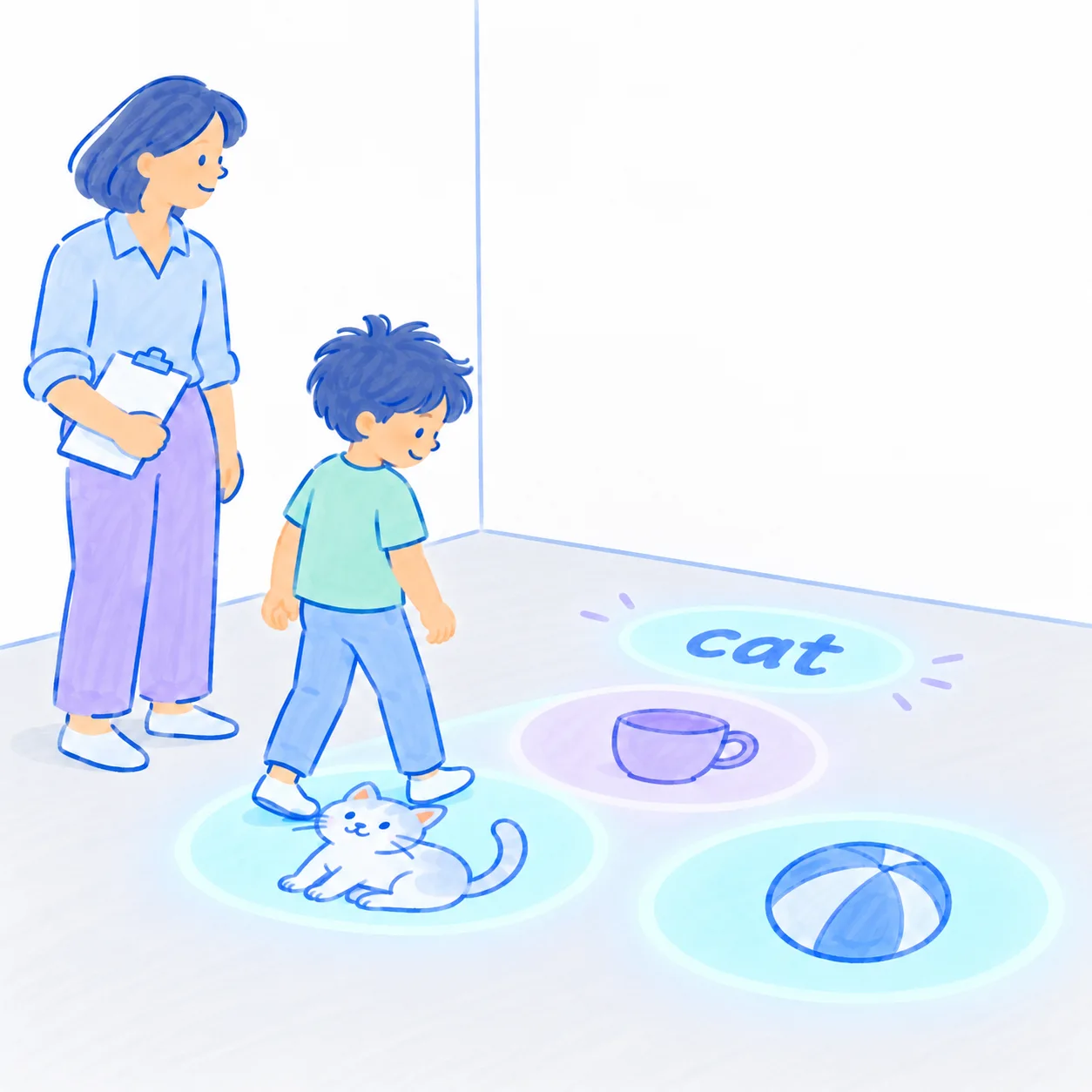
In NeuroLevel, the child selects a letter by touching or stepping on it. The educator can say a sound and ask the child to find the matching letter, so movement is tied to a specific learning response.
A Shared Space for Joint Participation
What the Study Examined
In Charlotte Mucchetti's study, four children with autism read adapted books with educators using pictures and real objects. The children stayed engaged for 87% to 100% of session time, compared to 41% to 52% during typical shared reading, and they also answered content questions more accurately.
How We Apply a Similar Principle
On the NeuroLevel floor or wall, everyone can see the task. Children can take turns selecting letters, compare answers, and talk them through with the educator, turning the digital game into a shared practice activity.
The Game Task Practices Visual Attention
What the Study Examined
Jessica Peters and colleagues studied 64 children with dyslexia. After five hours of a game that had them quickly notice and respond to visual objects, the game groups improved more in reading accuracy, speed, and comprehension than the group getting typical school support.
How We Apply a Similar Principle
In Alphabet Adventure, the child looks over the letters, finds the target, and selects it by touch or step. The search draws attention to differences between letters, while the completed word shows a clear result of the action.
One System for Different Learning Environments
Expert Perspective on Interactive Reading Learning

Dorinda Luzardo
Autism Intervention & Special Education Expert " alt="">
Gabriela De la torre
A therapist shares their perspective on using the wall in sessions.
Lis Espinosa
RBT, ABA Therapist
Amanda Sosa
BCBA PCM-P2 Behavior AnalystReading in Practice
Play
Dustin: Learning Letters Without a Pencil or Workbook
Dustin, a 28-year-old man with cerebral palsy, had difficulty holding a pencil and working in workbooks.
On the interactive surface, he used a soft pool noodle as an extension of his arm to select objects. This response method allowed him to practice letter recognition without needing to write. Over time, Dustin learned the alphabet and began recognizing letters and symbols.
Angels Reach Academy: Reading Activities on the Interactive Floor
Mishay, a summer camp counselor at Angels Reach Academy, says she uses letter games for reading activities.
The interactive floor brings these tasks into active, game-based practice. This format supports children and provides opportunities for different types of reading activities.
Play
Play
Angels Reach Foundation: Showing Knowledge That Was Not Visible at the Desk
Gabby, a behavior analyst at Angels Reach Foundation, describes how the interactive wall helped a child demonstrate academic knowledge that had not previously appeared in paper-based tasks.
The games are also used to practice prepositions and sequential directions. The child demonstrates understanding through object selection and actions.
