


 Social Skills Technology for Special Education
Social skills cannot be learned through explanation alone – they need to be practiced with other people.
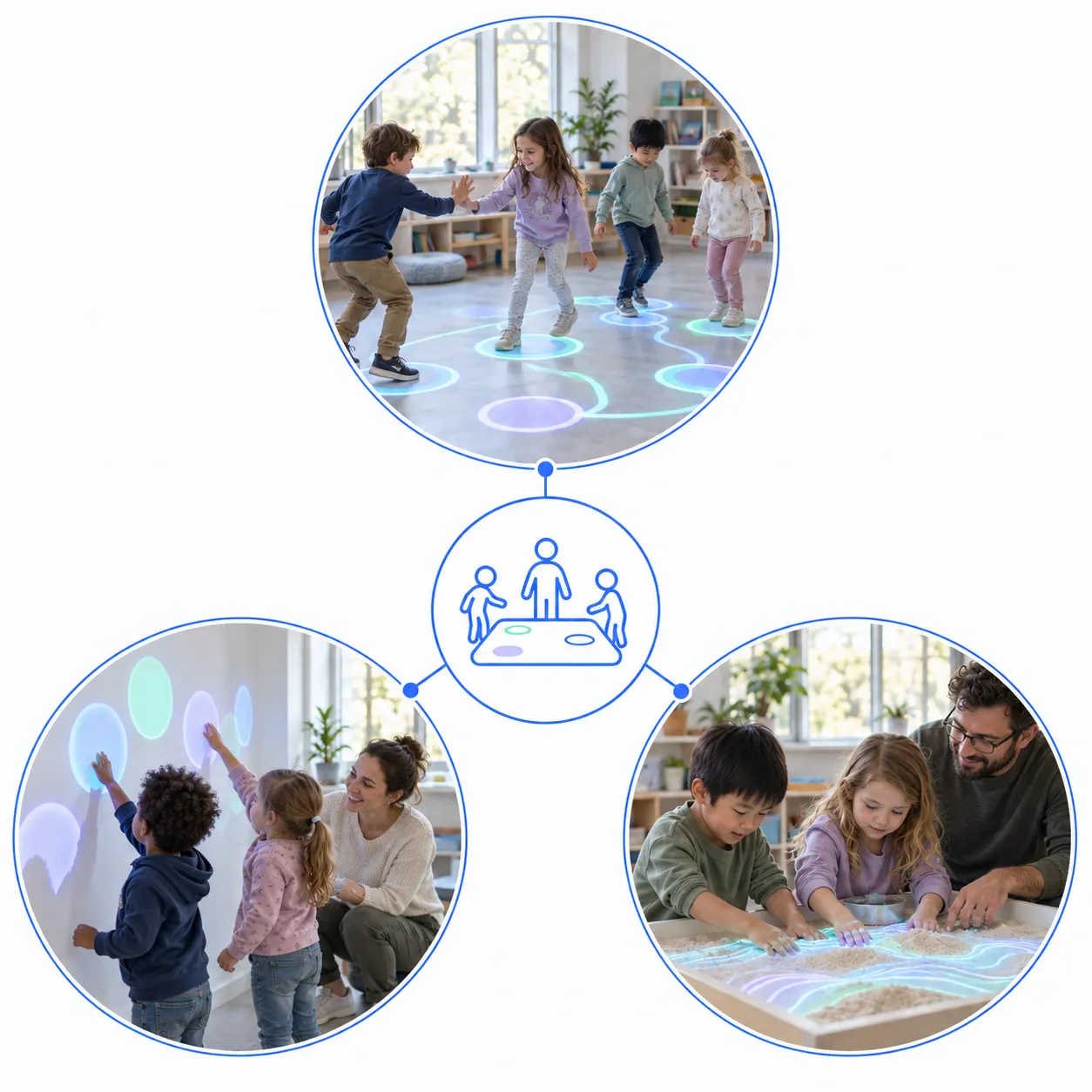
Neurolevel transforms the floor, wall, or table into a shared interactive space. Participants see the same task, take turns, coordinate with one another, help each other, and immediately see the result of their actions.
 Made in USA
 3 Years Warranty
 US based Support
No subscription or recurring fees. Access to games and free updates does not require an annual subscription.

What Social Skills Can Students Practice?
Social skills are not a single ability. To participate in a shared activity, a student needs to notice a partner, understand the rules, choose a way to respond, and coordinate their actions with others.
Joint Attention and Shared Focus
The ability to notice a shared object or event and maintain attention to it together with another person.
Turn-Taking and Waiting
The ability to wait for one’s turn, recognize when the turn changes, and pass the turn to another participant.
Initiating and Responding
The ability to initiate interaction with another person, ask for help, suggest an action, or respond when someone initiates contact.
Nonverbal Communication
The ability to notice and use eye gaze, gestures, direction of movement, interpersonal distance, and body position.
Teamwork and Coordination
The ability to share roles, work toward a common outcome, and take another participant’s contribution into account.
Emotional Awareness and Social Problem-Solving
The ability to recognize emotional cues, understand what happened during an interaction, and choose an appropriate way to continue it.


For children with ASD, direct social contact can often be a source of stress. The interactive floor allows children to play “side by side”: they share the same space and engage in the same activity without the pressure of maintaining direct eye contact. This is a natural and safe step from isolation toward cooperative teamwork.
How Neurolevel’s Interactive Mechanics Become
a Social Skills Training Tool
NeuroLevel does not have separate “socialization games”: social skills cannot be learned alone in front of a screen.
Instead, any game mechanic on the platform can become a tool for developing communication through two components.
Shared Physical Space
Projection on the floor, wall, or in the sandbox allows several children, a parent, or a therapist to participate at the same time. Activities can be organized in pairs, in a 2v2 format, or as parallel play.
Unlike a personal tablet, the interactive environment exists in a shared physical space. The child moves, sees the actions of other participants, and engages in verbal and nonverbal interaction.
The Specialist’s Role
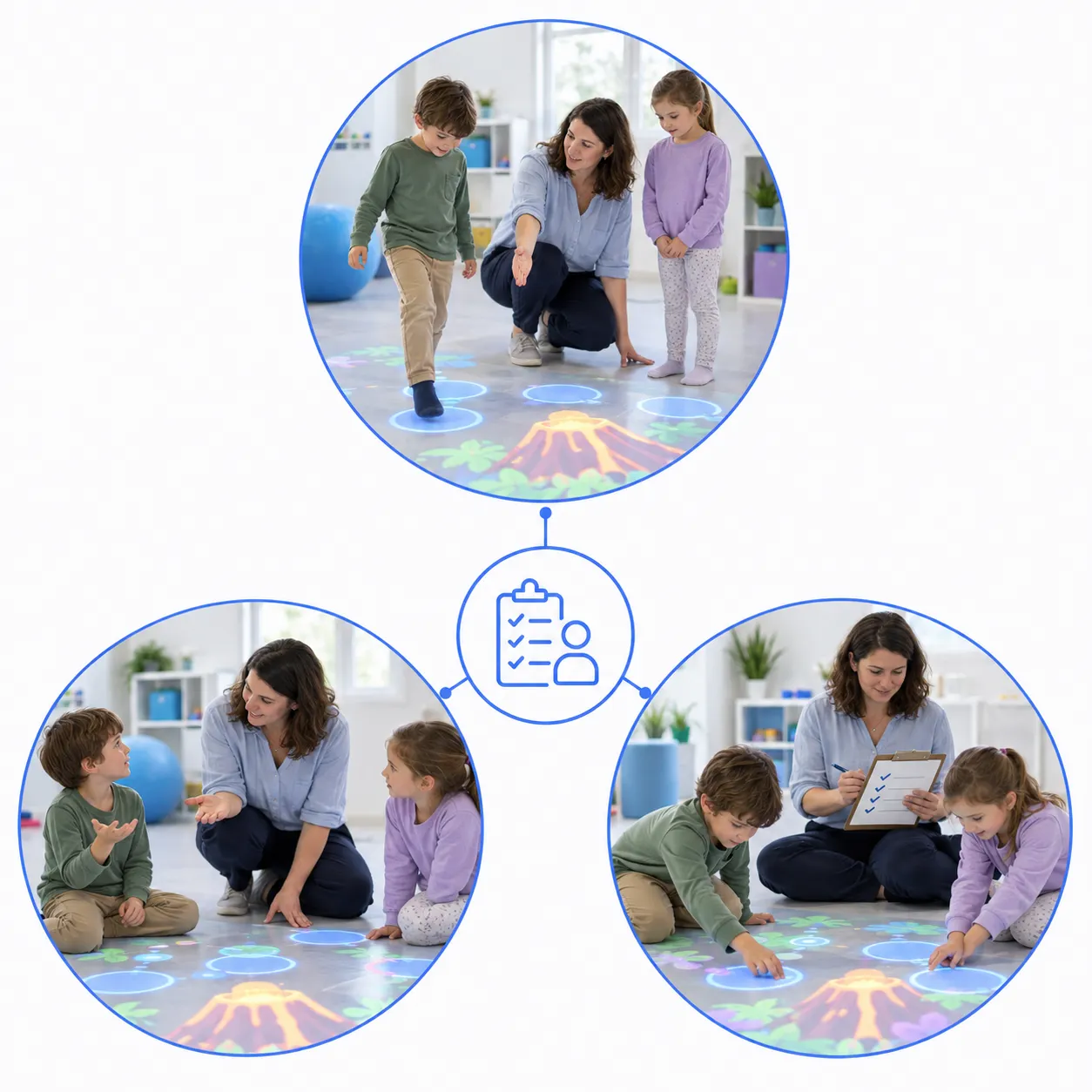
An educator or occupational therapist uses a game mechanic, for example, putting out a volcano, harvesting crops, or shooting a puck, and sets the rules for interaction: wait for a turn, make a decision together, ask for help, or use a nonverbal cue.
The game action can then be linked to a specific, measurable IEP goal, for example, tracking independent requests, waiting for a turn without prompts, or response time to a partner.
What Helps a Child Practice Social Skills
In this way, NeuroLevel creates a natural reason to communicate, while the specialist guides the interaction toward the child’s specific social and IEP goals.
Want to see which social goals can be integrated into your sessions? See the system in action.
[ 01 ]
Moving Beyond Device Isolation
Unlike a personal tablet, the projection system creates a shared physical space for play. The child moves, sees the actions of other participants, and naturally engages in verbal and nonverbal interaction.
[ 02 ]
Shared, Visible Goal
All participants look at the same play area and understand the outcome the group is working toward.
[ 03 ]
Natural Reason to Communicate
To continue the game, the child needs to ask, prompt, coordinate an action, or pass the turn.
[ 04 ]
Immediate Feedback
The system immediately shows the result of an action, making it easier for participants to understand what worked and what needs to change.
[ 05 ]
Multiple Ways to Participate
A response can be given through speech, gesture, touch, movement, or the child’s familiar AAC system.
[ 06 ]
Sensory Preparation for Interaction
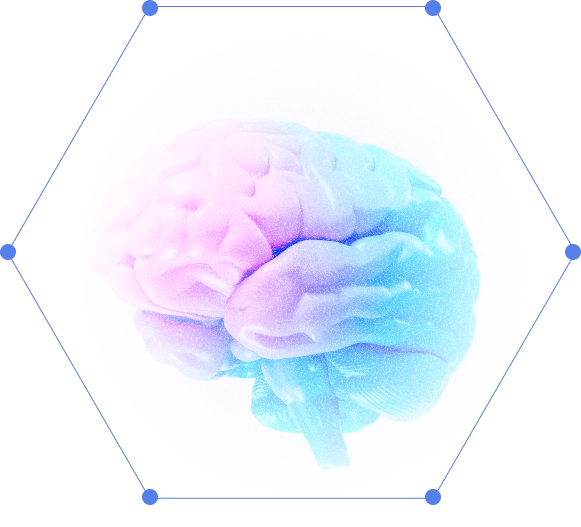
Before following a social rule, such as waiting for a turn, tactile and proprioceptive input can help the child reach a more appropriate level of arousal (the just-right state of arousal).
Explore Neurolevel Social Skills Games
One game can support different social skills, such as waiting for a turn, asking for help, or solving a problem together.
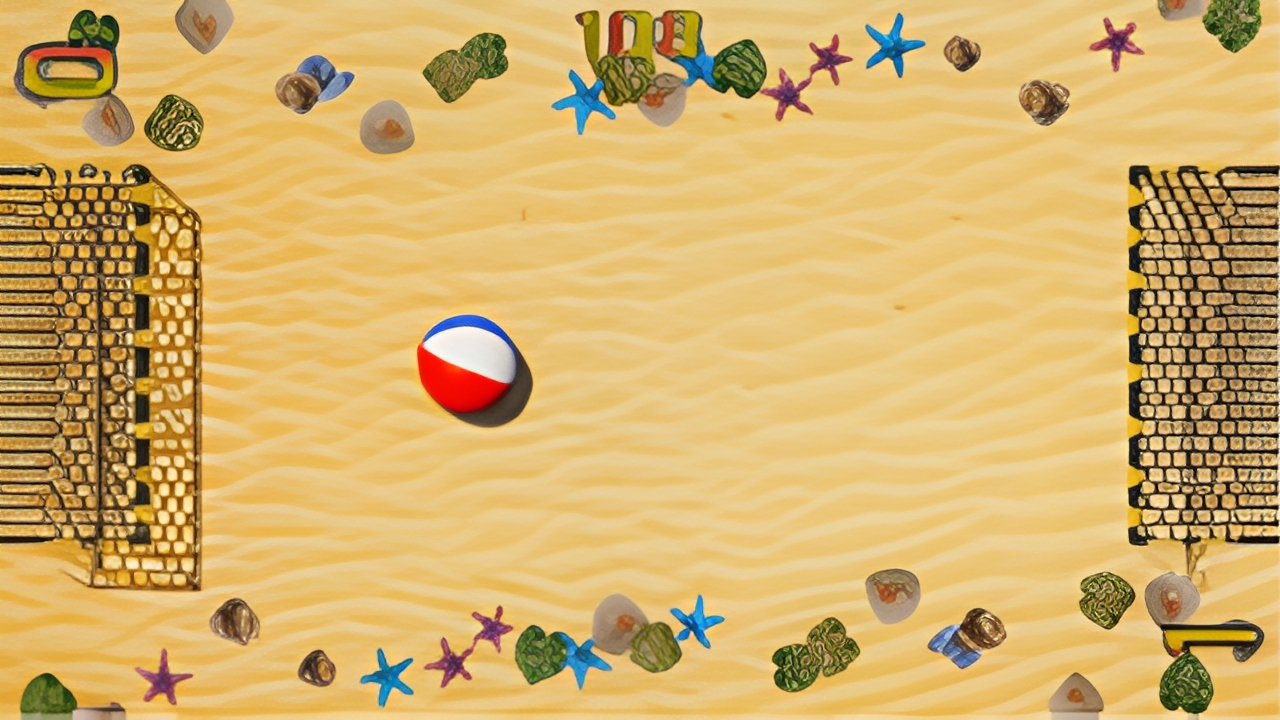
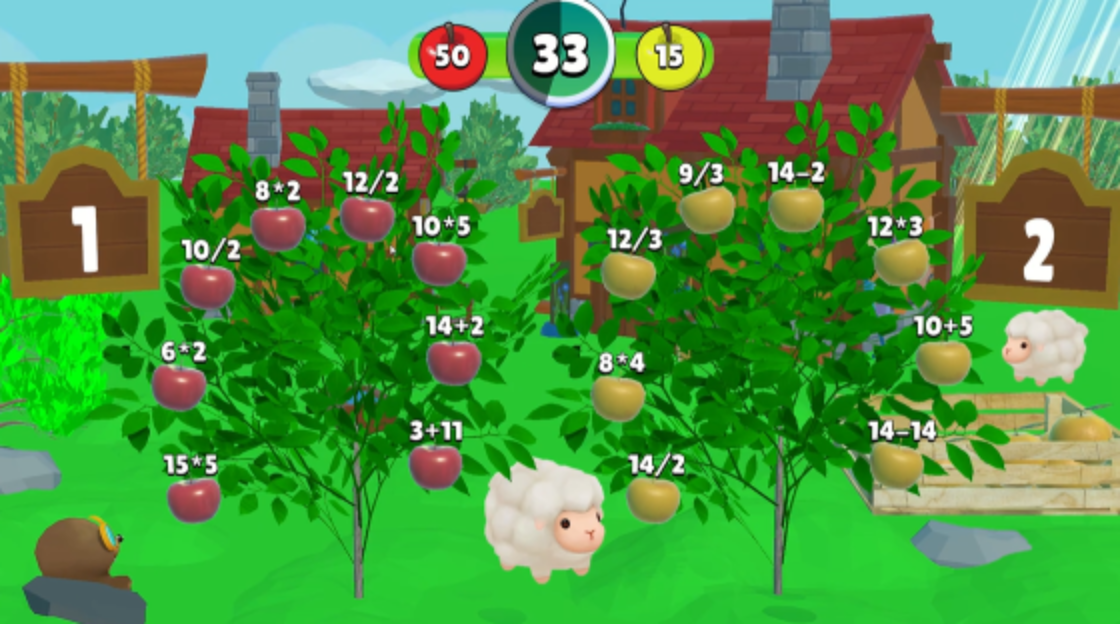
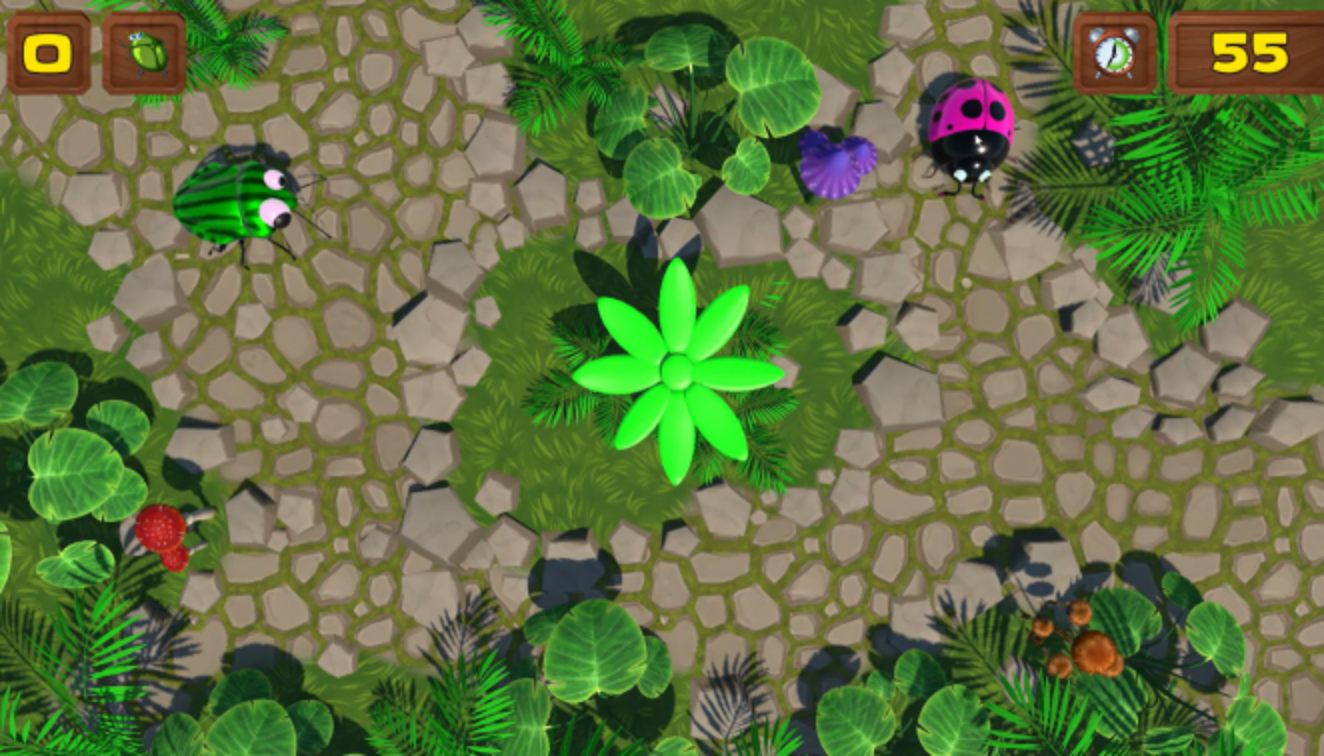
Explore the other games we offer and the skills they can help students practice.
One System for Different
Learning Environments
Neurolevel can be used where social skills are actually needed: in the classroom, a small group, a therapy session, or play at home.
Special Education Classrooms
An educator can organize activities in pairs or small groups. One student completes an action while another provides a cue, monitors turn-taking, or tracks the result.
Roles can be rotated so that each student practices not only completing the task, but also initiating with a partner, waiting, and making decisions together.
Therapy and Learning Centers
The same system can be used by different professionals to support social-skills development:
educator: to practice working with a partner, turn-taking, and following shared rules;
psychologist or behavioral specialist: to practice cooperation, responding to losing, and navigating social conflicts;
OT and SLP: to provide co-treatment focused on coordinating actions, following directions, making requests, and responding to a partner at the same time;
Between tasks, the game can be used as an active or calming break while maintaining one simple social rule: wait for the signal, pass the turn, or finish the round together.
General Education and Inclusive Schools
Social skills are more likely to generalize to everyday situations when students practice with actual classmates, not only one-on-one with an adult.
Neurolevel can be incorporated into learning stations, advisory or homeroom activities, SEL lessons, physical activity, or collaborative projects.
The teacher can vary partners and roles while keeping one clear rule consistent. This helps the student apply the skill with different people rather than only in a familiar pairing.
Home Practice
At home, the equipment can be used for shared play with parents, siblings, or friends. The activity does not need to become a formal lesson; it is enough to choose one goal, such as waiting for a turn, asking for help, or congratulating another participant.
Home practice does not replace professional support when a child needs it. It can help reinforce a familiar interaction skill in another environment.
Schools can explore whether funding may be available through Title I, which supports students from low-income families, or IDEA Part B, which supports special education services.
Learn MoreHow Is Technology Used in a Social Skills Lesson?
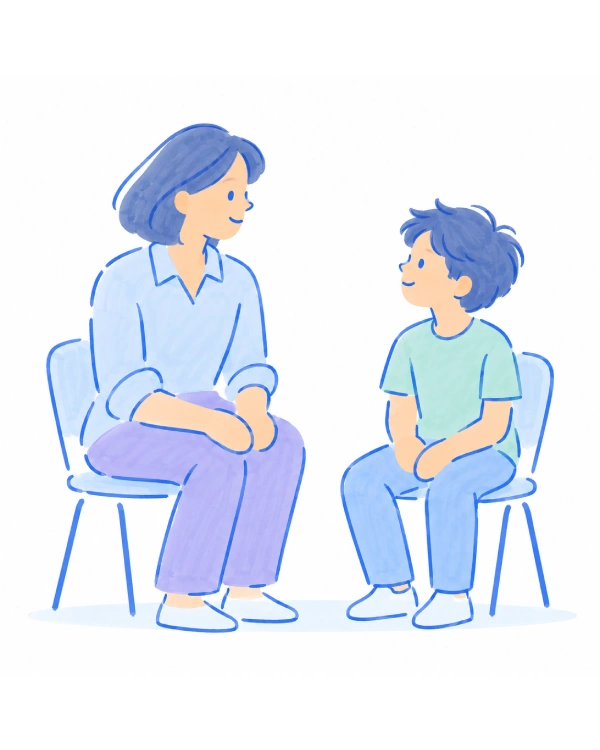
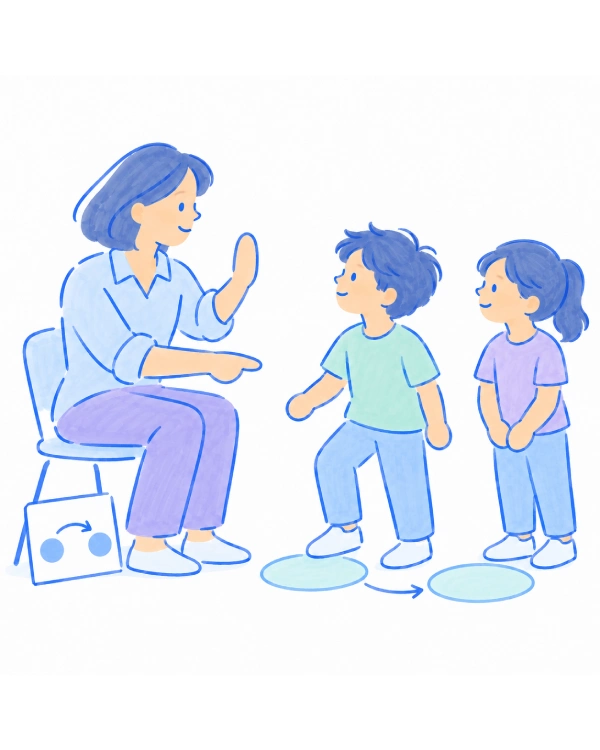
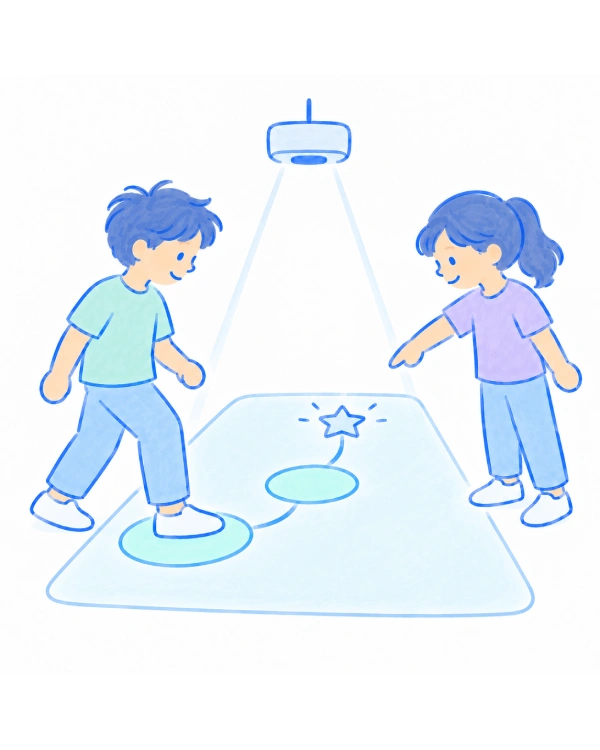
Research suggests that social skills are more likely to develop through active practice with other people than through explanation alone.
Guided Play. A review of nine studies found promising results for play involving adults and peers. In Neurolevel, the specialist sets the rule, assigns roles, and adjusts the level of support.
Peer Involvement. A study of 60 children from 30 schools found reduced isolation and improved interaction following peer-mediated activities. In Neurolevel games, the peer becomes an active partner rather than an observer.
Cooperative Movement. A study involving 28 participants with autism found improvements in understanding other people’s actions and states after cooperative movement-based games. Neurolevel similarly combines movement, a shared goal, and coordination with a partner.
Our games incorporate mechanics supported by research.
Ways to Use NeuroLevel in
a Social Skills Lesson
NeuroLevel can be integrated into a typical session: as a short warm-up, a partner activity, or a shared group task. The equipment is selected based on the goal and the number of participants.
[ 01 ]
Joint-Attention Warm-Up
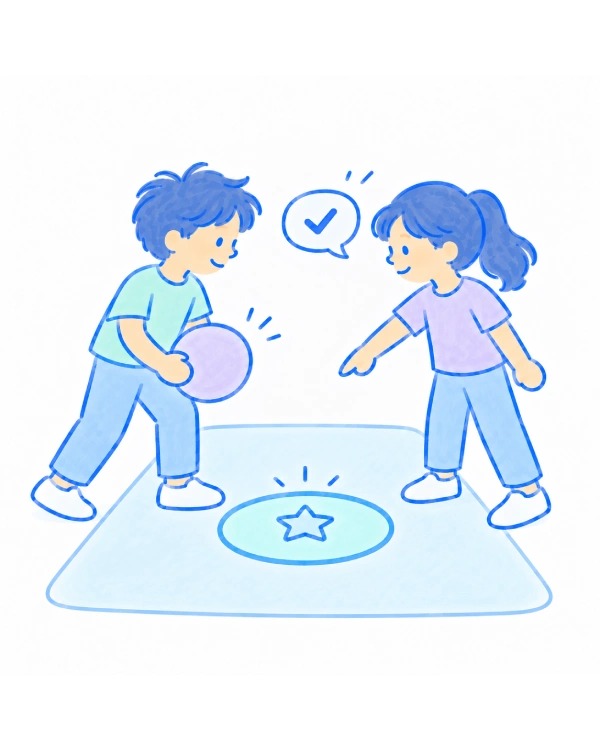
On the Sensory Floor, children look for matching objects, point them out to one another, and act after a shared cue. This helps them attend to the same play area and notice their partners’ actions.
[ 02 ]
Turn-Taking Practice
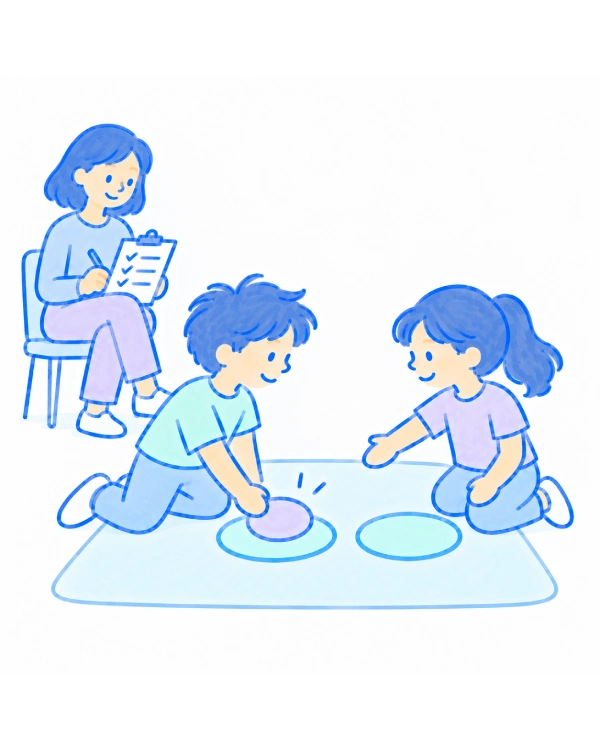
On the Sensory Wall, one child completes the task while the others wait, provide cues, or watch the result. The turn then passes to the next participant. The child can see who is acting now and when their own turn begins.
[ 03 ]
Partner Work
At the Multi-Touch Table, one participant names a color, object, or direction while the other carries out the action. They then switch roles. To complete the task successfully, they need to listen to one another, respond, and coordinate their choices.
[ 04 ]
Collaborative Group Task
In the Sandbox, children create a shared play environment together. One participant suggests an action, another carries it out, and a third evaluates the result. This helps them practice role-sharing and joint decision-making.
[ 05 ]
Creative Communication
With Animated Drawings, children create characters, show them to the group, and build a shared story. This provides a natural reason to start a conversation, ask a question, or respond to another participant’s idea.
[ 06 ]
Active or Calming Break
Between learning tasks, a short game can be played on the floor, wall, or table. Children begin on a shared cue, pass the turn, or finish the round together. The break changes the activity demands while preserving opportunities to practice interaction.
Custom Social Skills Activities for Your Program
A social skill is always tied to a specific situation: one child may need to ask for a break, another to join a group, and another to respond calmly to losing.
If the existing games do not fit the target skill, the Neurolevel team can develop a custom game with the appropriate roles, rules, and response options. This allows children to practice the specific situations they encounter in the classroom, therapy center, or at home.
Game Creator is currently in development. In the future, professionals will be able to upload their own materials and create interactive activities independently.
Expert Perspective on Interactive Social Skills Learning

Dorinda Luzardo
Autism Intervention & Special Education Expert
Gabriela De la torre
BA, BCaBa, ABA Therapist
Lis Espinosa
RBT, ABA Therapist
Amanda Sosa
BCBA PCM-P2 Behavior Analyst
Social Skills in Practice
A First Word During Shared Play
Two twin sisters came to the Jasen Autism Sensory Environment: one was speaking and the other was nonspeaking.
During a balloon game, the speaking sister repeatedly said “pop.” Her sister joined the shared activity and said the word for the first time after hearing her.
Social skills involved: joint attention, imitation, and initiation of verbal communication.
Inner ear
Internal
Hearing
Sight
Body awareness
Touch
to Your Classroom
See how collaborative activities work on the Sensory Floor, Sensory Wall, and Multi-Touch Table, and how one game can be adapted to different social goals.
During the demonstration, the Neurolevel team will help you determine:
which equipment fits your space;
which games can be used for partner and group activities;
how to connect a game activity to IEP or SEL goals;
how to adjust roles, prompts, and sensory input;
which custom activity could be developed for your program.
Frequently Asked Questions
Which Social Skills Can Students Practice With Neurolevel?
Is Neurolevel Appropriate for Children With Autism, ADHD, and Other Developmental Differences?
A diagnosis alone does not determine the appropriate format. Group size, duration, sensory input, and level of support are individualized.
Can a Student Participate Without Spoken Language?
How Can Games Be Linked to IEP Goals?
The specialist records data during the game and incorporates it into the student’s existing IEP documentation.
Does Neurolevel Have to Be Used Only in Group Sessions?
However, if the goal involves peer interaction, the skill should be practiced and assessed with actual peers, not only in an individual setting.
Is There Evidence That Interactive Games Can Support Social Skills?
The Neurolevel system provides an environment for practice; outcomes depend on the program, the specialist, and the individual characteristics of each participant.